
How a Custom Barong Tagalog Is Made

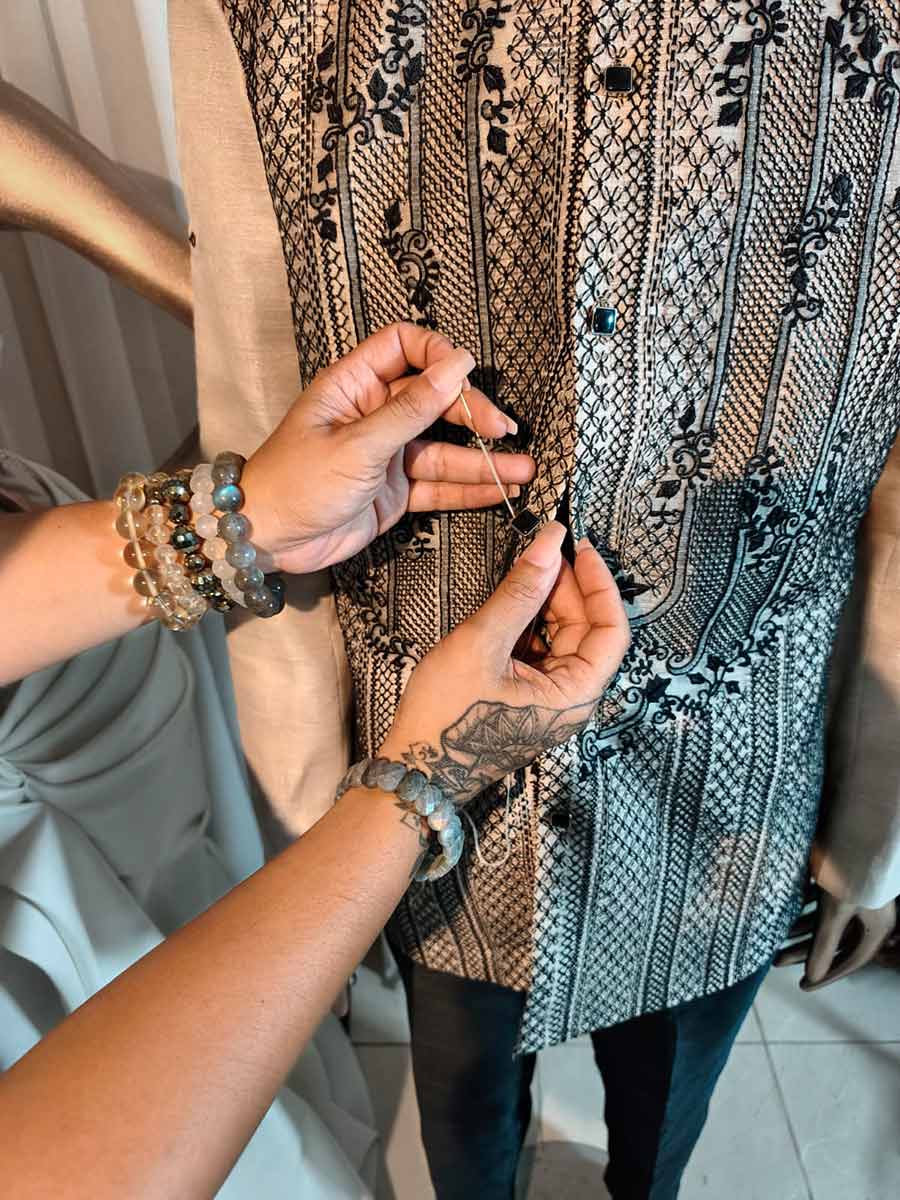
My name is Anton Dvoryadkin, and I work at Josip Tumapa Design. One of the main areas of our work is making Barong Tagalog.
Until now, I had never owned a barong of my own. In this article, I describe the entire process of creating my first full custom barong — from choosing the design and fabric to the embroidery, tailoring, and fitting.
I hope this article will show the details of this long process and explain why making a barong like this requires so much time and work.
Choosing the Barong Style
The process begins with choosing the style. I chose a coat-style barong because it is easier to put on. A classic barong can sometimes require assistance to put on, and its fit is greatly affected by changes in weight.
If you gain weight without really noticing it, you may simply no longer fit into it. I wanted to wear my barong for as long as possible without worrying that I might be unable to put it on at the most important moment.
For very formal occasions, however, a classic barong is, of course, more appropriate.
Choosing the Fabric for a Custom Barong Tagalog
After choosing the style, I needed to decide on the material. This was not a difficult choice because I had already decided on the fabric. I wanted either pure piña or piña silk with natural silk added.
Piña is a natural fabric made from fibers extracted from pineapple leaves. The entire production process is done by hand: the fibers are extracted from the leaves, and the fabric is then woven on a handloom.
Piña is considered one of the most expensive materials used to make Barong Tagalog. Historically, clothing made from this fabric was affordable mainly to wealthy and prominent Filipinos.
I chose piña silk — a fabric made from natural piña fibers combined with silk thread. The material selected for my barong was also made by hand. By choosing it, I wanted to support the production of these fabrics. It was also important to me that this fabric has historical roots and is still made by hand. This kind of production is rare today.
Some fabrics are also called piña or piña silk, even though the only thing they share with genuine piña is the color. Unfortunately, there are many such imitations on the mass market. They are often cheap synthetic fabrics made to resemble real piña. But that is another story.
Designing the Barong Ornament
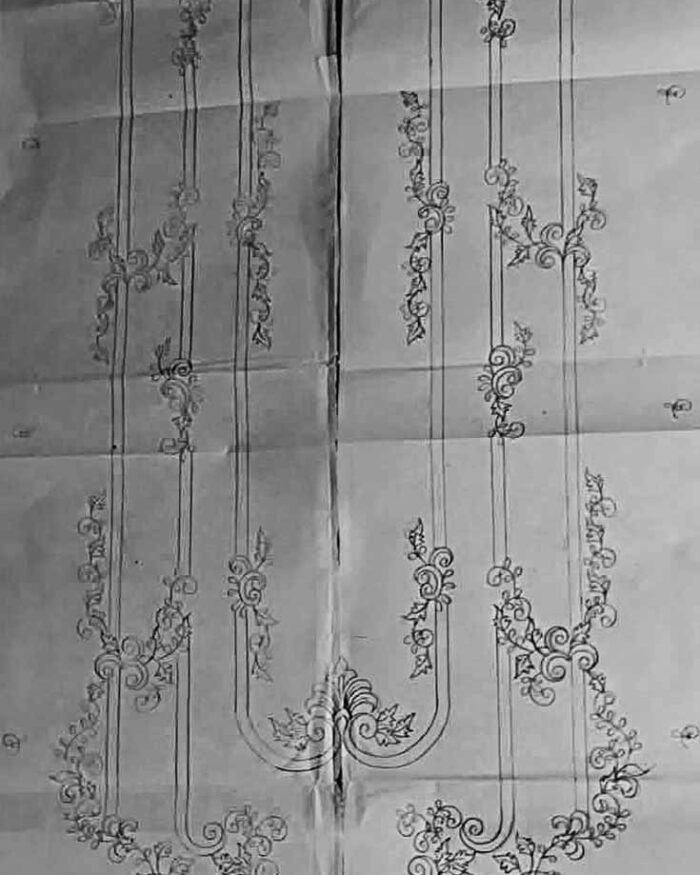
After choosing the fabric, the next logical step was the ornament. As with the fabric, I preferred an ornament made by hand.
First, in my opinion, it is more beautiful. Handwork has slight, almost imperceptible irregularities that add value to the garment.
I have also supported the Arts and Crafts movement since I was 18, and I believe that an object made by hand carries a certain warmth. This is very important to me. It is also genuinely prestigious.
But what kind of ornament should I choose: traditional, ethnic, or individual? This required some thought. I actually like all of these styles, but in the end I was choosing between a traditional and an individual ornament.
In a full custom barong, the entire ornament is developed individually for a specific order. If desired, it can also include one or more elements that reflect the person, their interests, or their roots.
At first, I wanted to add an element that reflected me, but I could not find anything that truly said something about me while still looking concise within the overall design.
Since I work at a computer, forcing a computer into a classic ornament did not seem like the best idea. I therefore chose a traditional ornament made using the calado technique.
Hand Embroidery and Calado
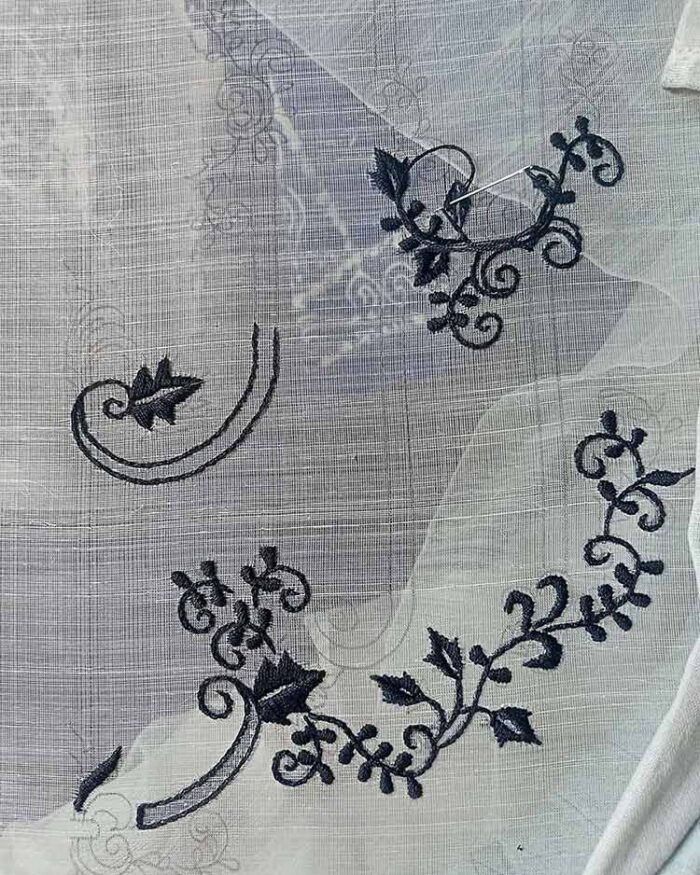
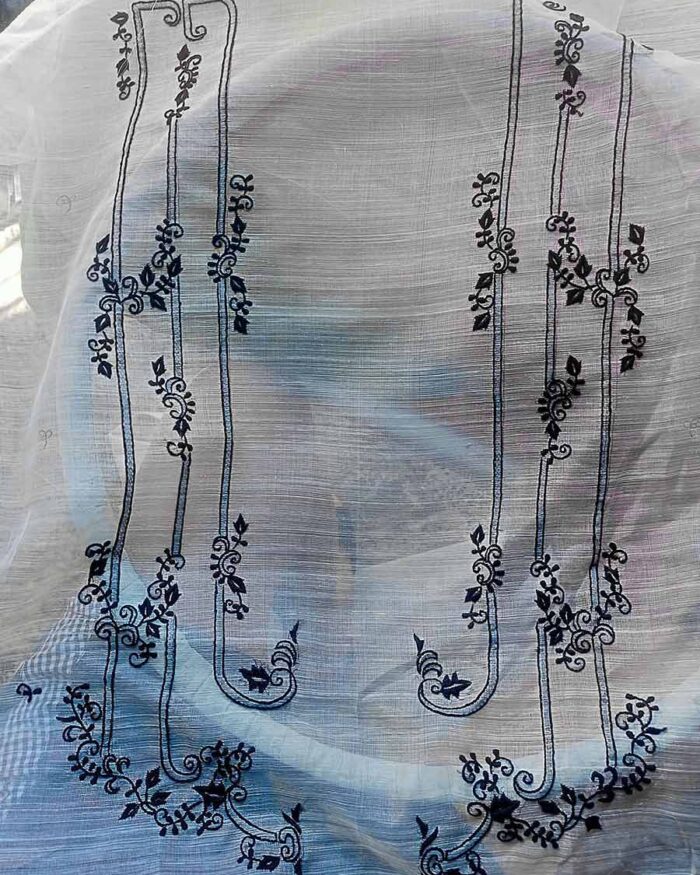
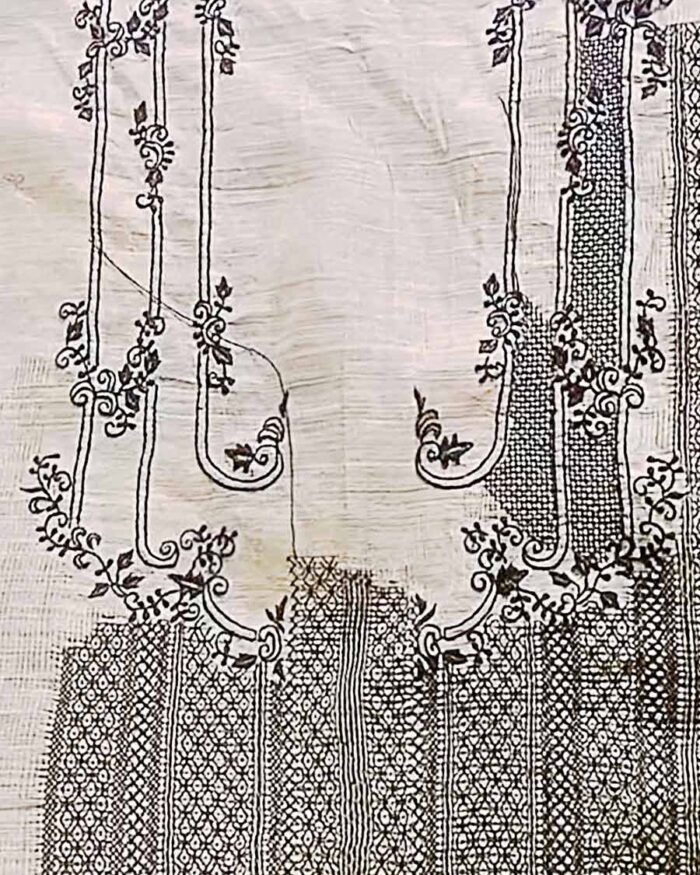
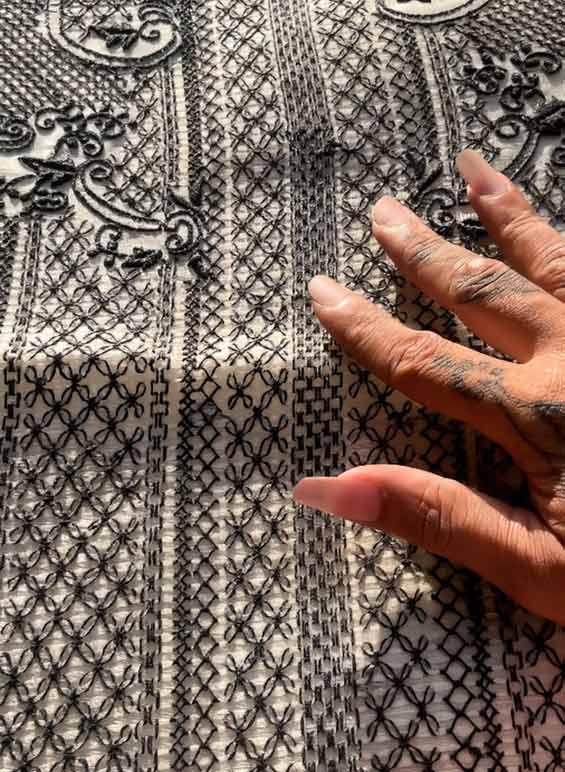
Calado is a hand technique in which some of the fabric threads are removed, while the remaining threads are secured and joined to create small transparent areas and geometric patterns. This work requires great precision from the artisan.
After Josip prepared the ornament sketch for the barong and I approved it, my barong moved from the virtual stage to the practical one: the artisans began transferring the ornament onto the fabric and creating it by hand.
This turned out to be a fairly long process because everything was done without machines. Embroidering all the details and completing the calado took about a month.
Creating the Pattern and Cutting the Fabric
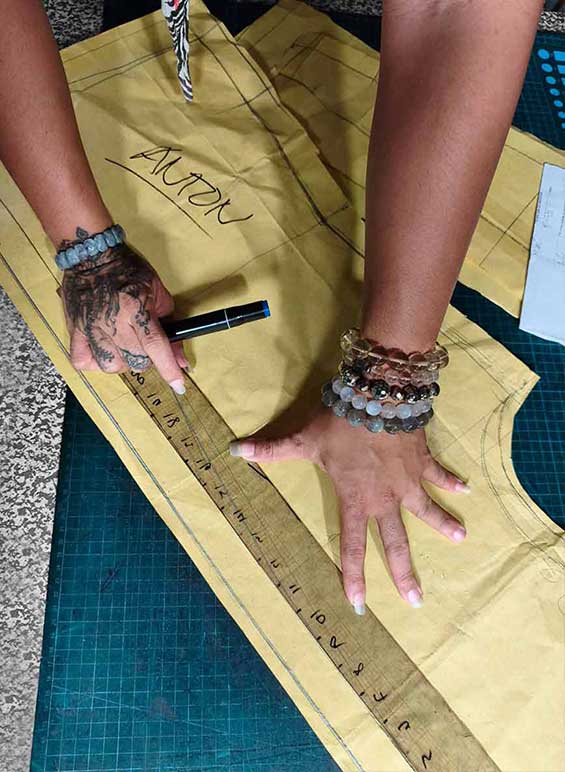
Once the ornament was finished, a pattern was made according to my individual measurements, and the fabric was then cut using that pattern.
I often observe processes like this, and I admit that I would not risk cutting the fabric myself. I would be too afraid of cutting away something unnecessary and ruining the expensive material. But Josip does it confidently and easily — the result of extensive experience.
Tailoring the Custom Barong Tagalog
Only then were the cut pieces gradually joined, and the seams, collar, sleeves, and fastening were finished.
There is also a risk at this stage, although it is not as obvious as during cutting. The pieces can be joined unevenly or out of alignment. It may seem that a seam can simply be unpicked and redone, but the needle leaves holes in the fabric, and the material can be damaged. This is why the workers’ experience plays such an important role.
The Final Fitting
All the main stages were complete. Only the fitting remained.
The barong fit well on the first try, just as I had expected. I was satisfied with the result. I was not surprised when I saw it finished, as clients sometimes are, because I had been present at every stage of the process.
The Finished Full Custom Barong
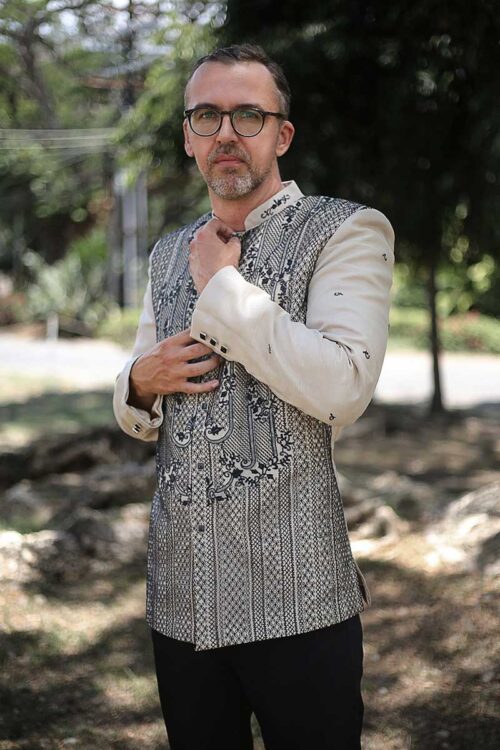
About a month has now passed since my barong was finished. I ask myself whether I would like to change anything about it, and my answer is no. I am satisfied with everything about this barong.
I have a good friend who completed a textile design program at a prestigious university. I showed him my barong. He was delighted and genuinely surprised:
“This is wonderful. I cannot imagine how much work it took to create an ornament like this.”
I was very pleased to hear that. Now I am actively looking for formal events where I can wear my new barong.
The finished Barong can also be viewed in our portfolio: Full Custom Calado Barong Tagalog.
You can explore our made-to-order Barong Tagalog options to learn more about fabrics, design choices, and pricing.
The full ordering guide explains the consultation, measurements, production, and delivery process.