
Custom Barong Tagalog vs. Ready-to-Wear: What’s the Difference?

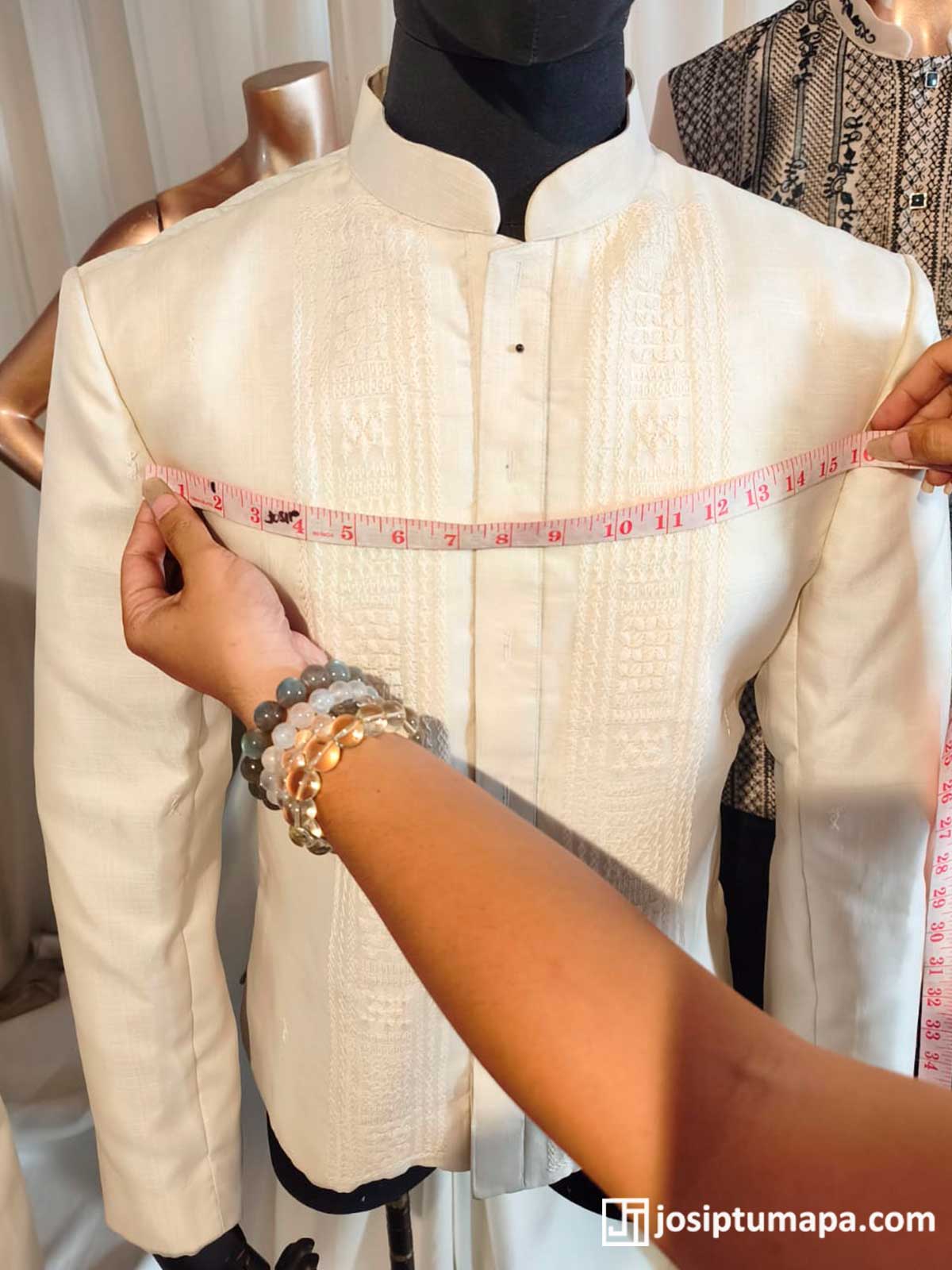
The word “custom” is used very broadly in the Barong Tagalog market. There is no single practical definition: different sellers use the term for very different levels of individual work.
In one shop, custom may mean an existing design made to the client’s measurements. Somewhere else, the customer may be able to choose from several collar styles, fabrics, or embroidery colors. With a full custom approach, the design itself, its proportions, and the ornament can all be developed individually.
In practice, there are four useful categories: ready-to-wear, made-to-order, made-to-measure, and full custom. The main difference is how much of the Barong has already been decided before the client places an order.
The label “custom Barong” alone does not tell you exactly what you are getting.
It is more useful to look at how much can actually be changed: the fit, proportions, fabric, ornament, and the design itself.
1. Ready-to-Wear Barong Tagalog
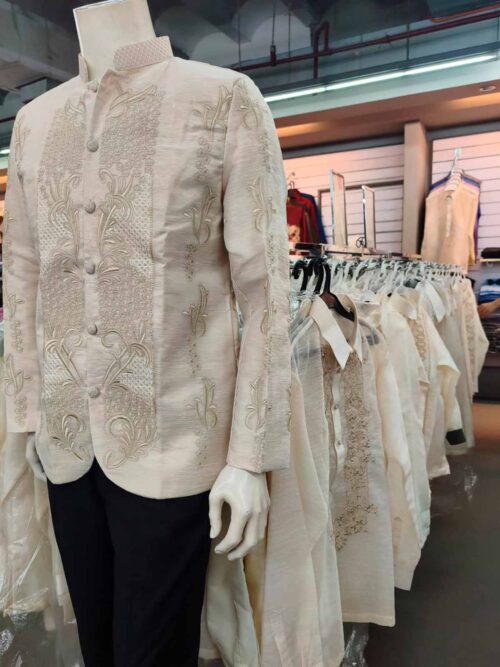
Ready-to-wear, or RTW, is a finished Barong that already exists at the time of purchase.
The design, fabric, collar, embroidery, and proportions have already been determined. The customer usually only needs to choose a standard size such as S, M, L, or XL.
If a Barong is needed at short notice, RTW is often the most practical option.
It works well for someone who fits standard sizing and has already found a design they like.
It is also usually more affordable because the same design and pattern can be used repeatedly.
The main compromise is fit.
Two people with the same chest measurement do not necessarily have the same shoulders, arm length, posture, or body proportions. A ready-to-wear Barong may technically be the right size but still fit less precisely than a garment made for a particular person.
There is also very little freedom in the design. The customer is choosing an already finished solution. There is also a chance that someone else at the event may be wearing the same Barong, which may matter to some people.
2. Made-to-Order Barong Tagalog
Made-to-order primarily means that production begins after the order is placed.
The term itself does not necessarily mean that the Barong is individually designed or custom.
For example, a customer may choose a specific model from a catalog, select a color and a standard size, and the shop begins making that model after payment.
The garment is produced after the order, but its design, pattern, and main details already existed before that particular customer placed the order.
This approach allows a seller to offer more fabrics, colors, and models without keeping every possible version in stock.
A made-to-order Barong can still use a standard pattern, a predetermined collar, fixed ornament placement, and standard proportions.
Being made after an order is placed says very little about the actual level of customization. What matters more is which parts of the Barong the customer is genuinely able to change.
3. Made-to-Measure or Limited Custom Barong
This is where the meaning of “custom” often becomes less clear.
With made-to-measure, the customer is no longer limited to an S, M, or L. Measurements are provided, and an existing model is adjusted to the individual body.
Sometimes this is combined with a choice of specific details:
- collar;
- fabric;
- embroidery color;
- buttons;
- length;
- one of several available ornament designs.
Personalization now goes beyond size and includes certain elements of the garment.
For example, a customer may choose an existing Barong from a catalog, provide measurements, select one of three collars, and change the embroidery color. The resulting Barong is considerably more personalized than RTW, but the underlying model and design still existed beforehand.
The practical difference is that the Barong is no longer selected simply as a standard S or L. It is adjusted to the measurements of a particular person.
Made-to-measure works well when the main goal is better fit and some personalization of an existing model. But if the customer wants the design of the Barong itself to be developed specifically for them, this level of customization may not be enough.
There is another practical difficulty as well. Customers may have to choose from a large number of collars, fabrics, details, and other options. For someone without experience, making all of those decisions can be difficult without guidance from a designer.
4. Full Custom Barong Tagalog
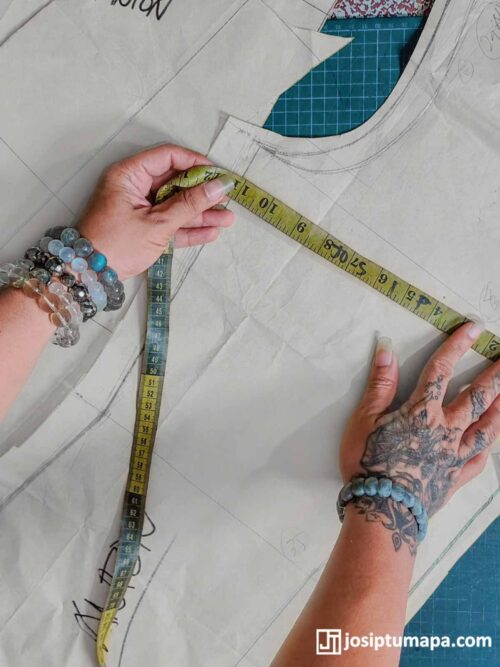
Full custom involves a deeper level of individual development.
The process may begin with the person, the occasion, a particular fabric, or simply an idea of what the Barong should look like. In some cases, an existing style may serve as the starting point, but the decisions that follow are not limited to a fixed menu of options.
Elements that may be determined individually include:
- proportions;
- silhouette;
- level of formality;
- fabric;
- collar;
- construction;
- ornament technique;
- embroidery or calado;
- ornament scale;
- ornament placement;
- personal or cultural details.
For a wedding Barong, fit is only one part of the decision. The bride’s clothing, the type of ceremony, the venue, and the desired level of formality may also influence the design.
An individual design does not necessarily mean elaborate decoration. A full custom Barong can be very minimal.
The difference is that decisions are made for a particular client rather than simply because a certain combination already exists in a catalog.
Full custom also takes more time.
The design needs to be discussed, materials selected, measurements taken or submitted, and embroidery, calado, or other elements may require separate development and approval.
This option is usually more expensive and requires greater involvement from the client. A designer also plays an important role in the process, helping the client navigate the choices and suggesting suitable solutions for both construction and design.
If a Barong is needed within a few days, RTW may be the more sensible choice. For a wedding or another important occasion, individual development can make much more sense.
The production process is explained in more detail in How a Custom Barong Tagalog Is Made.
Ready-to-Wear, Made-to-Measure and Full Custom Compared
| Feature | Ready-to-Wear | Made-to-Order | Made-to-Measure | Full Custom |
|---|---|---|---|---|
| Existing design | Yes | Yes | Usually | Not necessarily |
| Standard sizing | Yes | Often | No | No |
| Individual measurements | No | Sometimes | Yes | Yes |
| Fabric choice | Limited | Sometimes | Often | Yes |
| Collar choice | Usually fixed | Limited | Often | Determined individually |
| Ornament | Existing design | Usually existing | Choice of options | Can be developed individually |
| Ornament placement | Fixed | Usually fixed | Partly adjustable | Determined individually |
| Design developed for the client | No | No | Usually not | Yes, or substantially developed |
| Production time | Shortest | Short to medium | Medium | Usually longest |
| Price | Usually lowest | Low to medium | Medium | Usually highest |
What Does “Custom Barong” Actually Mean?
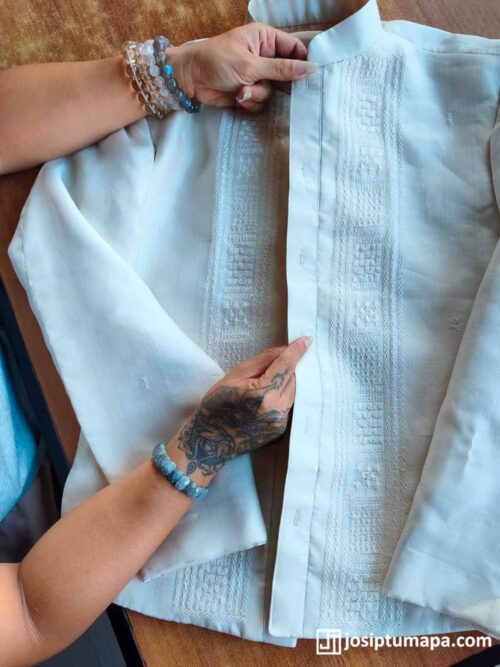
There is no single practical definition of custom across the market. Different sellers use the word for different amounts of individual work.
For one seller, custom may mean an existing model made to individual measurements. For another, it may be the same model with the option to change the collar, fabric, or embroidery color. In a full custom process, the individual work can extend to the design of the garment itself.
Before ordering, it is worth clarifying a few points:
- Do you have to choose an existing model?
- Are individual measurements used?
- Can the proportions be changed?
- Is the ornament selected from a catalog or developed individually?
- Can its scale and placement be changed?
- How much freedom is there in choosing the fabric?
- Does the process include a design consultation?
The answers usually make it clear whether you are looking at an existing model adjusted to measurements or a genuinely individual design process.
Which Type of Barong Tagalog Should You Choose?
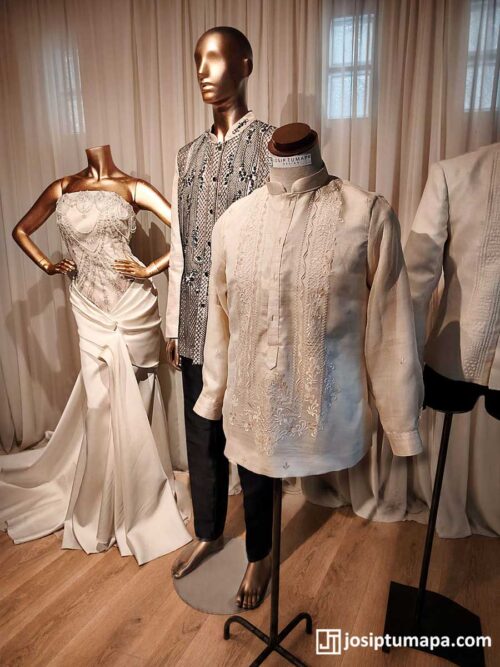
Ready-to-wear makes sense when speed, price, and simplicity are the main priorities.
Made-to-order suits someone who has already chosen a particular model and is willing to wait for it to be produced.
Made-to-measure is worth considering when better fit and some personalization are the main goals, without developing an entirely new design.
Full custom gives the client greater freedom in working with the design, fabric, proportions, and ornament because the decisions are not limited to a standard set of predefined options.
Working with Barong Tagalog and individual orders, I have repeatedly seen the word “custom” used for very different services, ranging from changing the size of an existing model to developing a new design.
At Josip Tumapa Design, a custom Barong Tagalog may be based on an existing style or developed as a fully individual design. In both cases, the client’s measurements, fabric, proportions, and ornament are considered together, while the level of individual development depends on the particular project.
The distinction is fairly simple: in one case, an existing Barong is adapted to the client; in the other, the individual design work extends to the design of the garment itself.
FAQ: Custom Barong Tagalog
1. Is A Made-to-Measure Barong The Same As Full Custom?
No. With made-to-measure, an existing design or pattern is usually adjusted to individual measurements. With full custom, the individual work may also include the design, proportions, fabric, ornament, and other elements of the Barong.
2. Does Made-to-Order Mean Custom?
Not necessarily. Made-to-order means that production begins after the order is placed. The garment can still use a standard design and standard sizing.
3. Can A Barong Still Be Custom If It Is Based On An Existing Design?
Yes. The level of customization does not depend only on whether the starting design already exists. A Barong can be made to individual measurements with individually selected fabric, ornament, and other details. Full custom allows for an even broader level of individual development.
4. What Should You Ask Before Ordering A Custom Barong?
Ask whether individual measurements are used, how freely the fabric can be selected, whether the ornament is developed individually, and how much of the existing design can be changed.