Traditional Filipino clothing

Barong Tagalog vs the Western Suit

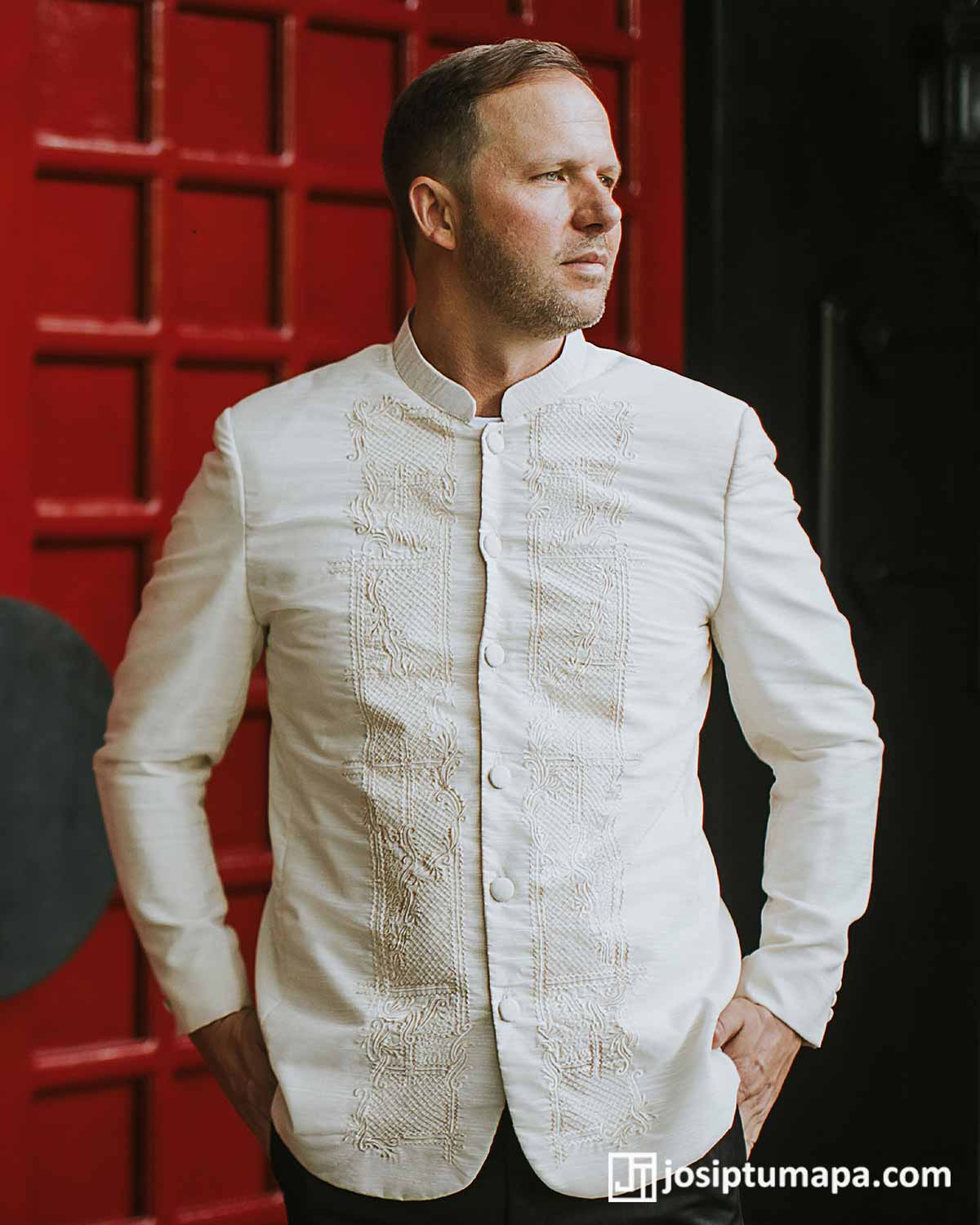
Man wearing a white coat-style Barong Tagalog with tonal embroidery against a red architectural background

What Is the Barong Tagalog?

The Barong Tagalog is a form of Filipino formalwear. In the Philippines, it is often worn for weddings and official events.

In its simple form, it looks like a shirt, and when we speak about a coat-style barong, it looks more like a lightweight jacket.

Barong Tagalog Beyond Filipino Cultural Dress

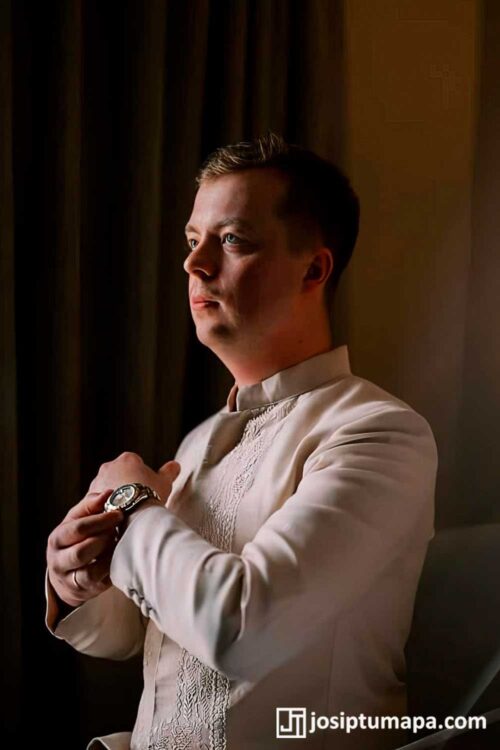
Man wearing a cream coat-style Barong Tagalog in a dark interior while adjusting his sleeve
A cream coat-style Barong Tagalog worn in a dark evening setting as an alternative to a Western suit jacket.

For many Filipinos, the barong is first of all national clothing, as well as clothing for weddings and different ceremonies. It is not something people usually wear every day, unless they work in a place where it is required by the dress code.

But for an international audience, the barong is interesting beyond that. It can look like something new, while still repeating the form of familiar garments. A coat-style barong resembles a lightweight jacket, while a regular barong is closer to a formal shirt worn untucked.

How the Barong Tagalog Differs from a Western Suit

The Western suit is built around a clear silhouette, lining, and shaped shoulders.

A coat-style Barong Tagalog is the most formal version of the barong, and it is also the closest to a Western suit. In shape, it can resemble a military-style jacket, but the ornament changes everything. The embroidery is usually placed on the front, and sometimes also on the back or sleeves.

Barong Tagalog vs Western Suit: Key Differences

A Western suit is usually worn with a shirt, trousers, and often a tie. It is built around tailoring, lining, and a shaped silhouette.

A Barong Tagalog is usually lighter and worn untucked. A regular barong works more like a formal shirt, while a coat-style barong can replace a jacket for weddings, ceremonies, and other formal events.

The difference is also visible in the details. A suit depends mainly on cut and construction, while a barong often draws attention to fabric, embroidery, calado, and ornament.

For warm climates, the barong can also feel more practical than a fully lined suit. However, the choice still depends on the event, dress code, and level of formality.

Coat Barong vs Western Suit

Because Barong Tagalog styles vary widely, the comparison below focuses on the coat-style barong, which is the closest in form and function to a Western suit jacket.

FeatureCoat BarongWestern Suit
SilhouetteMore defined than a regular barong, but usually lighter and less heavily shaped than a suit jacketClearly shaped through tailoring, lining, and shoulder construction
Main focusFabric, embroidery, calado, ornament, and individual designCut, construction, fit, proportion, and tailoring
FabricPiña, piña blends, cocoon silk, and other lightweight barong fabricsWool, linen, cotton, silk blends, and synthetic fabrics
How it is wornWith formal trousers and without a tie; it may be worn with a decorative brooch on the chest and can replace a suit jacketWith a shirt and trousers, often with a necktie or bow tie
ClimateGenerally more practical in warm climates because of its lighter constructionDepends on the fabric and lining, but a fully lined suit may feel warmer
FormalitySuitable for weddings, ceremonies, official events, evening events, and other highly formal occasionsSuitable for business, weddings, evening events, ceremonies, and formal occasions
Best occasionsFilipino weddings, cultural ceremonies, state occasions, evening events, and other formal occasions where Barong Tagalog is appropriateBusiness meetings, weddings, evening events, formal ceremonies, and occasions requiring Western dress

Barong Tagalog Embroidery and Handwork

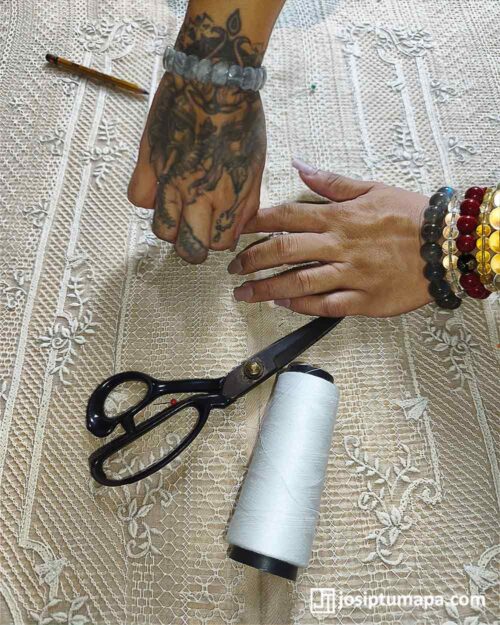
Hands working over detailed calado embroidery with scissors, thread, pins, and sewing tools visible
Close-up of calado embroidery in progress, showing the detailed handwork behind a Barong Tagalog.

The ornament of a barong can be machine-made, handmade, or combine both methods. Calado is a form of openwork embroidery that creates small openings within the fabric, often combined with botanical or other decorative motifs.

The ornament may also be developed specifically for the client, reflecting personal tastes, work, interests, or other details. For a closer look at the embroidery, calado, cutting, and construction process, see How a Custom Barong Tagalog Is Made

Piña and Other Barong Tagalog Fabrics

Piña is one of the most valuable Barong Tagalog fabrics. It is made from pineapple leaf fiber and woven by hand, while blended fabrics such as piña cocoon silk can provide greater durability while retaining some of piña’s lightness and texture.

Some fabrics are marketed as piña despite containing little or no genuine pineapple fiber. For signs of authentic and imitation piña, see our guide on where to buy an authentic Barong Tagalog

Why Handmade Barong Tagalog Is Difficult to Scale

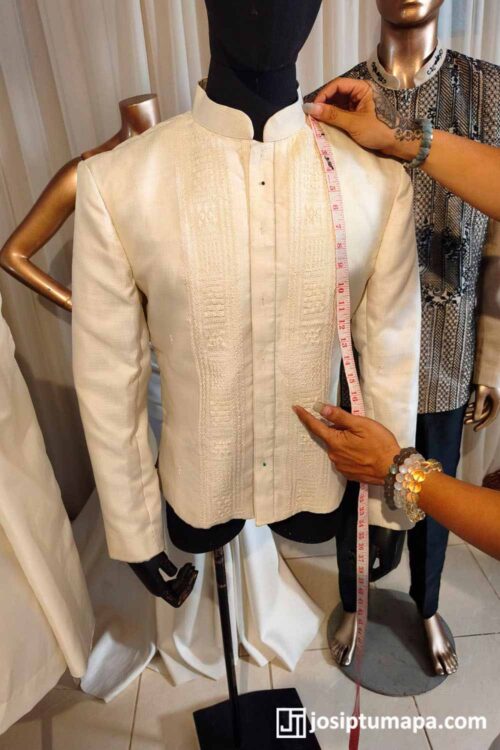
Cream coat-style Barong Tagalog on a mannequin during fitting and measurement in the design studio
A cream coat-style Barong Tagalog on a mannequin during fitting and measurement in the studio.

The same things that give the barong its value — handmade ornament and fabric — are also difficult to scale. Training embroidery specialists takes a lot of time, and not everyone can do this kind of work well. The same is true for piña fabric.

This means that increasing production cannot easily happen without affecting the quality of the barong itself. On one hand, this is a strength, because the handmade barong remains outside the mass-market zone. On the other hand, it is difficult for business, and cheaper production can come at the expense of quality.

Why the Barong Tagalog Is Relevant Today

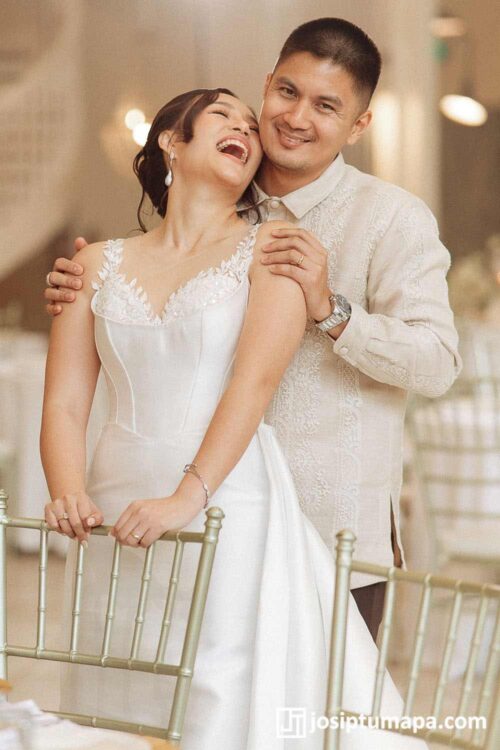
Groom in an embroidered Barong Tagalog standing with a bride in a modern white wedding dress
A groom in an embroidered Barong Tagalog beside a bride in a modern white wedding dress.

At the moment, the barong is still especially relevant in the Philippines and among Filipinos abroad. Many Filipinos want to show their roots during a wedding by choosing a barong instead of a traditional suit. Foreign men marrying Filipinas also often choose a barong as a sign of respect for the Philippines.

It is possible that demand for the barong will also grow among non-Filipinos in other countries. There are strong reasons for this, especially when we speak about a barong made by hand. Such a garment can offer handwork, individuality, and a high level of detail without entering the price range often associated with Western bespoke formalwear.

Barong Tagalog as a Modern Formalwear Option

The barong may not become a replacement for the Western suit. But it can become another option for formal clothing.

FAQ: Barong Tagalog vs Western Suit

1. Can the Barong Tagalog Replace a Western Suit?

Yes. A Barong Tagalog can be worn instead of a Western suit for weddings, ceremonies, and many official events. A coat-style barong is the closest option to a formal jacket, while a regular barong works more like a formal shirt worn untucked.

2. Is the Barong Tagalog Suitable for Non-Filipinos?

Yes. Non-Filipinos may wear a Barong Tagalog, especially at Filipino weddings and cultural or formal events. It is generally seen as a respectful choice when worn appropriately and with an understanding of the occasion.

3. Is a Barong Tagalog Better for Warm Weather Than a Suit?

A Barong Tagalog is generally lighter than a fully lined Western suit and can be more practical in a warm climate. However, comfort also depends on the fabric, construction, fit, and level of formality required by the event.

Leave a Reply

Your email address will not be published. Required fields are marked *