
Barong Tagalog symbol of Filipino heritage

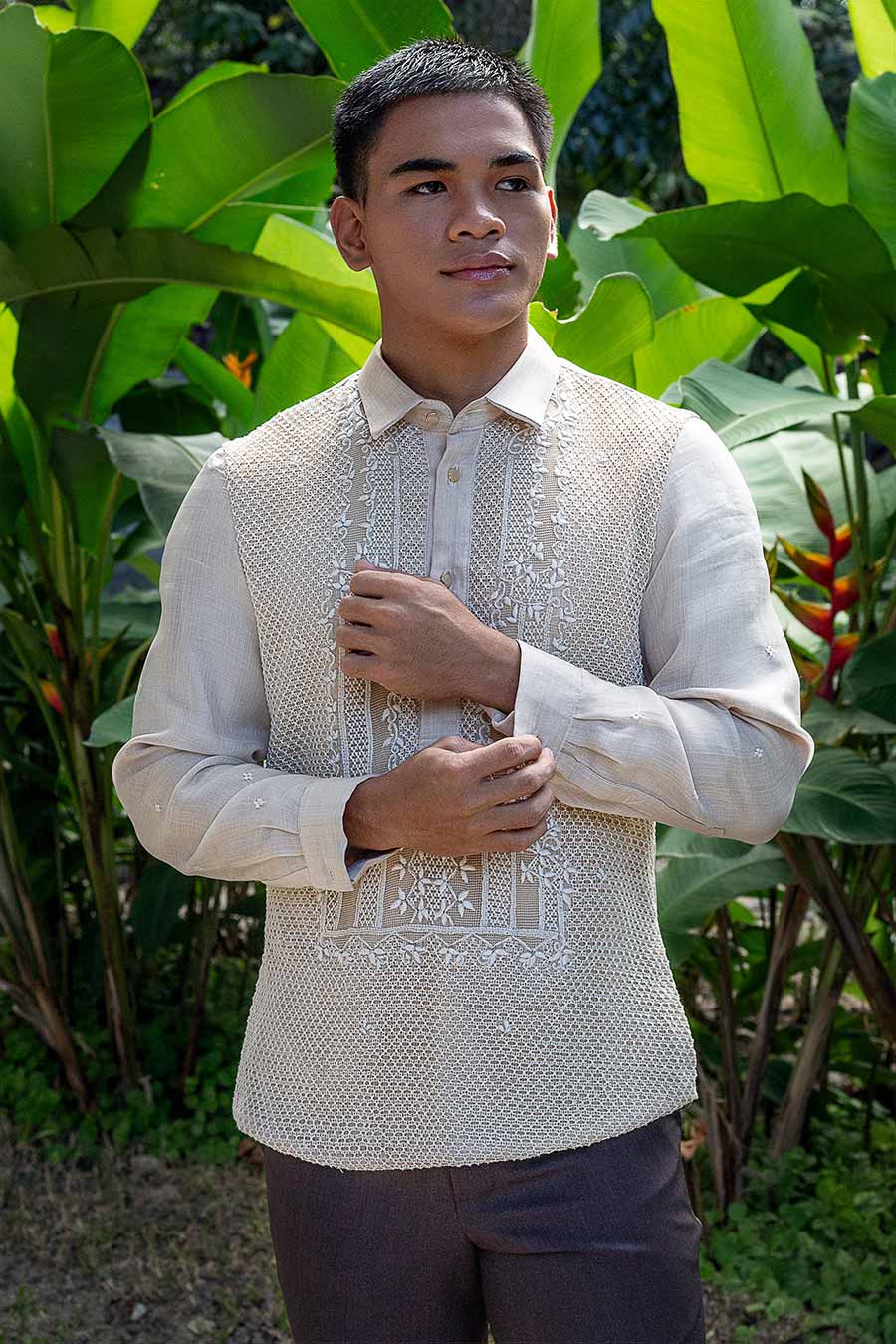
The Barong Tagalog is one of the most recognizable garments in Filipino culture. Light, formal, and often embroidered, it is worn at weddings, official ceremonies, cultural events, and important family occasions.
For many Filipinos, the barong is more than formalwear. It represents dignity, tradition, and a visible connection to Filipino identity. At the same time, it remains a garment that can change with the wearer, the occasion, and the design.
What Is the Barong Tagalog?
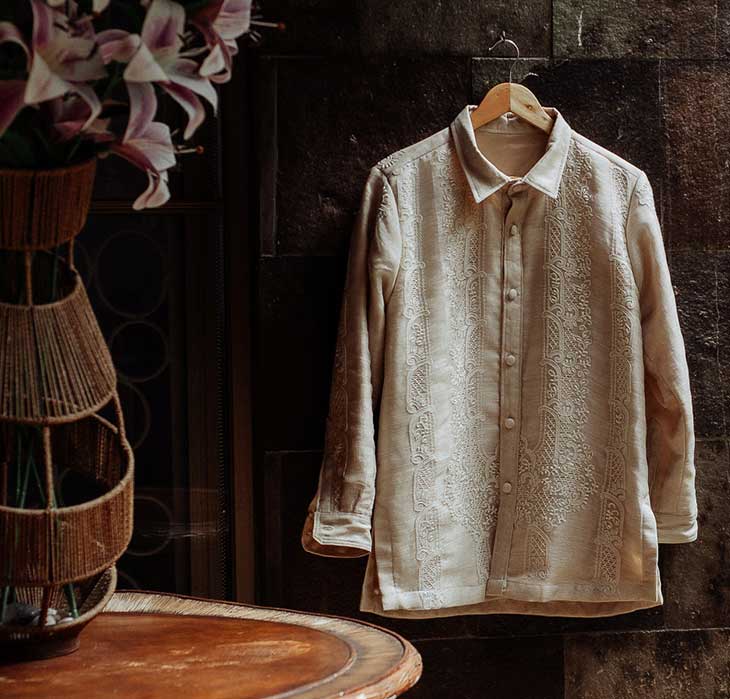
The Barong Tagalog is a traditional Filipino formal shirt, usually made from lightweight and semi-sheer fabric. It is worn untucked over an undershirt — a shape that immediately separates it from Western formalwear.
Although the barong is primarily associated with men’s formal clothing, its influence also appears in modern Filipiniana, womenswear, and contemporary formal design. Its clean structure and embroidered details make it suitable for both traditional and modern occasions.
A barong may look simple at first, but fabric, embroidery, collar shape, sleeve finish, and fit can all shift how traditional, formal, or contemporary the garment feels.
The Origins of the Barong Tagalog
The origins of the Barong Tagalog are connected to early Filipino clothing traditions and later colonial-era formalwear. Long before the modern barong became a national symbol, lightweight upper garments were a practical response to the Philippine climate.
Over time, the barong developed into a more formal garment. Fine woven fabrics, embroidery, and a breathable shape made it appropriate for ceremonies, public events, and occasions that called for formal dress.
The Spanish colonial period influenced how formal clothing developed in the Philippines, but the barong kept a distinct local identity. Unlike a Western suit jacket, it was worn outside the trousers and made from lighter materials suited to the heat.
That combination — practical, formal, and locally grounded — is what turned the Barong Tagalog into one of the clearest markers of Filipino heritage.
Why the Barong Became a Filipino Symbol
The Barong Tagalog became symbolic because it holds several things at once: it is formal without being heavy, decorative without being excessive, and traditional without being fixed.
Public officials, grooms, performers, and family members wear it at major events — often not only because it is expected, but because it signals respect for the occasion and a connection to Filipino culture that a suit simply cannot.
Its consistent presence at weddings, ceremonies, and official events is what kept it relevant. Fashion shifted around it; the barong stayed.
Traditional Fabrics and Embroidery
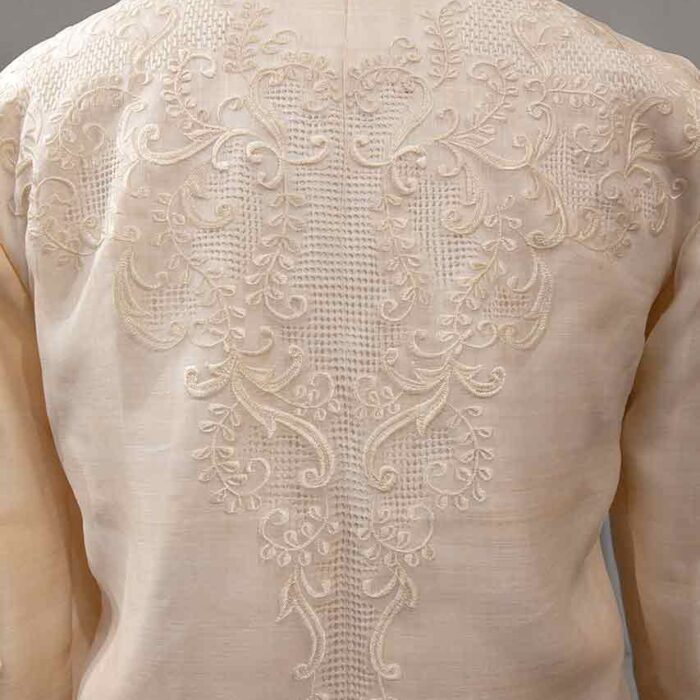
Fabric is one of the most important decisions in a Barong Tagalog. Traditional and high-quality pieces are most closely associated with natural fibers: piña, jusi, abaca, and cocoon silk blends. These materials give the garment its lightness, transparency, and formal presence.
Piña, woven from pineapple fiber, is particularly valued for its delicate texture and its deep connection to Filipino weaving tradition. Jusi offers a smoother surface and is more widely accessible. Abaca and silk blends bring additional texture, softness, or structure depending on the construction.
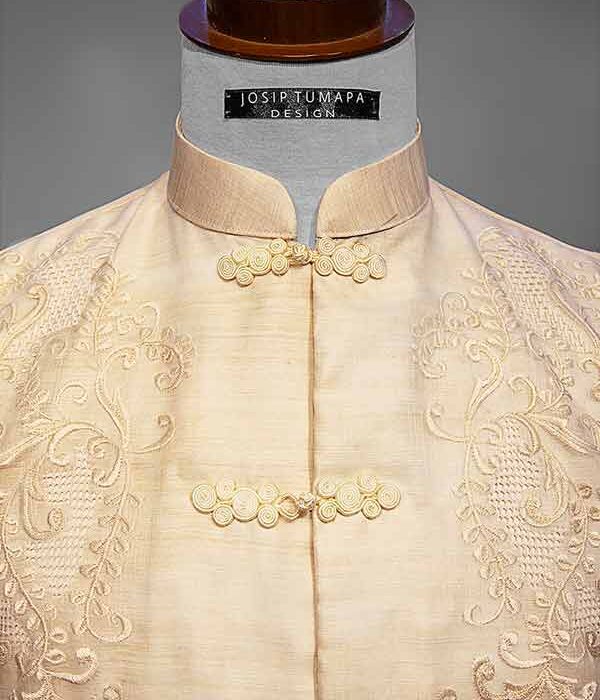
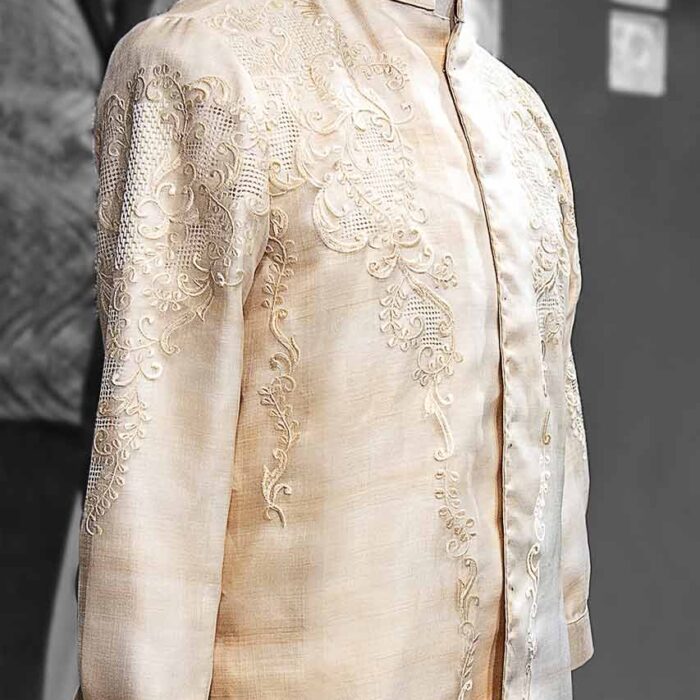
Embroidery defines the character of the barong as much as the fabric does. Traditional pieces carry embroidery on the front panel, cuffs, chest, or sleeves — floral, geometric, symbolic, or custom-designed depending on the occasion and the wearer. A heavily embroidered barong reads as ceremonial; a spare one reads as modern. Neither is more correct.
Barong Tagalog in Weddings and Formal Events
The Barong Tagalog is strongly associated with weddings — worn by grooms, fathers, ninongs, groomsmen, and guests across the Philippines and Filipino communities abroad.
It works at weddings because it is unambiguously formal without copying a Western suit. The wearer can honor Filipino tradition while still dressing appropriately for the occasion.
A groom’s barong tends to carry more embroidery and finer fabric than a guest’s. The difference is usually subtle, but visible to anyone paying attention.
Outside weddings, the barong appears at government events, cultural programs, graduations, award ceremonies, formal dinners, and national celebrations. Its role in all of these is consistent: it marks the occasion as one that deserves care.
The Barong in Modern Filipino Fashion
Modern Filipino fashion has expanded what the Barong Tagalog can look like. Today, designers adjust the silhouette, embroidery placement, material, transparency, color, and construction — while still working within the garment’s established language.
Some modern barongs stay close to tradition. Others introduce sharper tailoring, unusual embroidery placement, layered construction, or different proportions. The barong can absorb these changes because its identity is grounded in something more than a single fixed form.
The versions that work are the ones that do something specific with the tension between old and new — not stripping out all tradition, and not treating the garment as a museum piece either. For clients dressing for a wedding, cultural event, or personal milestone, this balance matters: the garment can feel personal without losing the cultural meaning that makes it worth wearing.
Custom Barong Tagalog and Personal Design
A custom Barong Tagalog lets the wearer make deliberate choices rather than selecting from ready-made styles. Fabric, embroidery, fit, occasion, and design direction can all be considered from the start.
For weddings and formal events, this matters. The barong needs to fit the mood, the color palette, and the level of formality — and those variables are different for every occasion. A custom piece can also reflect the wearer’s taste without sacrificing the cultural meaning of the garment.
For clients looking for a made-to-measure piece, Josip Tumapa Design creates custom Barong Tagalog garments based on the occasion, preferred style, fabric direction, and embroidery details.
Why the Barong Still Matters Today
The barong is not a historical artifact. It is worn at weddings happening this weekend, at ceremonies taking place right now, at family events where the choice of clothing is part of how respect is communicated.
That active presence is what keeps it relevant. It carries the history of Filipino dress, but it earns its place at each occasion on its own terms — through how it looks, what it signals, and what it asks of the wearer.
As Filipino fashion receives more attention locally and internationally, the Barong Tagalog remains one of its most recognizable reference points. It shows what happens when traditional clothing is treated with enough care to stay alive.
Final Thoughts
The Barong Tagalog is shaped by climate, craftsmanship, ceremony, and identity. Its value is not only in how it looks, but in the occasions it has shown up for — and continues to show up for.
Whether worn in a traditional form or reinterpreted through contemporary design, the Barong Tagalog remains one of the clearest expressions of Filipino heritage in clothing.
FAQ
What does the Barong Tagalog symbolize?
The Barong Tagalog symbolizes Filipino heritage, dignity, and cultural identity. It is worn when the occasion calls for something that carries meaning beyond appearance.
When is the Barong Tagalog worn?
The Barong Tagalog is worn at weddings, graduations, government ceremonies, formal dinners, cultural events, and national celebrations.
What fabrics are used for a Barong Tagalog?
Common fabrics include piña, jusi, abaca, cocoon silk blends, and other lightweight formal materials. The fabric affects the texture, transparency, and formality of the finished piece.
Is the Barong Tagalog only for men?
Traditionally, the Barong Tagalog is most closely associated with men’s formalwear. However, its design language has long influenced womenswear, contemporary Filipiniana, and modern formal pieces.
Can a Barong Tagalog be custom-made?
Yes. A custom Barong Tagalog can be designed around the wearer’s measurements, occasion, fabric preference, embroidery style, and overall design direction.