
Barong Tagalog Price Guide

Why I Decided to Write This Article
This article came out of a simple conversation with a friend of mine. He asked for my advice on choosing a barong because he did not want to spend too much money. After that, I started thinking about which Barong Tagalog I would choose myself at different budget levels. I am talking here about barongs in the classic style, meaning for weddings and formal occasions.
This is my personal opinion, and it may not match yours. But I will try to explain why, in each case, I would choose that particular option.
Which Barong I Would Choose on a Limited Budget
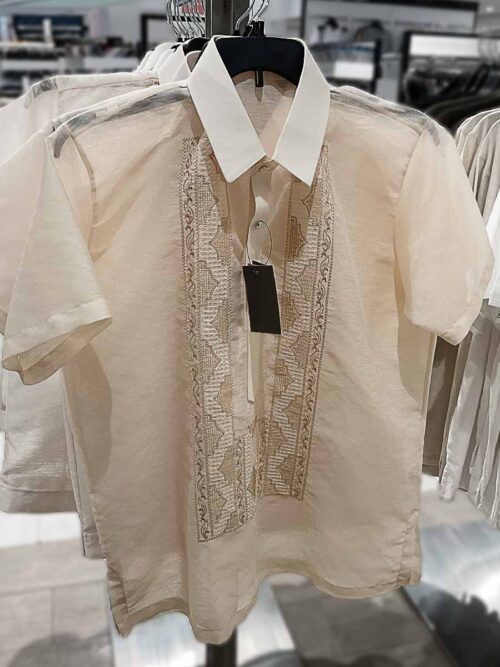
By a limited budget, I mean a Barong Tagalog up to 4,000 pesos in the Philippines and up to 120 dollars in the US. Barongs in this segment are usually not made to order but sold ready-made. As a rule, they are made from cheaper fabrics such as polycotton, polyester, faux piña, or organza.
In this price segment, synthetic or semi-synthetic fabrics are the most common. Still, in my view, polycotton with some natural cotton in it or a barong made from pure cotton is a better option, because the fabric contains a natural material. It is more comfortable on the body, especially in a hot climate. And although cotton is not considered a classic material for the barong, barongs were also made from it in the past, so it is not completely foreign to this garment.
There can be a practical problem here, though: there are not many ceremonial or wedding barongs made from these materials. More often, these are office barongs. Still, exceptions do exist, and they are worth looking for.
If I could not find a suitable barong made from cotton or polycotton, then I would look at synthetic materials. The downside is that they can feel hot and may stick to the body, especially if the event lasts a long time.
Which Barong I Would Choose in the Mid-Range Segment
Mid-range segment:
Philippines — ₱5,000–₱10,000
USA — $120–$200
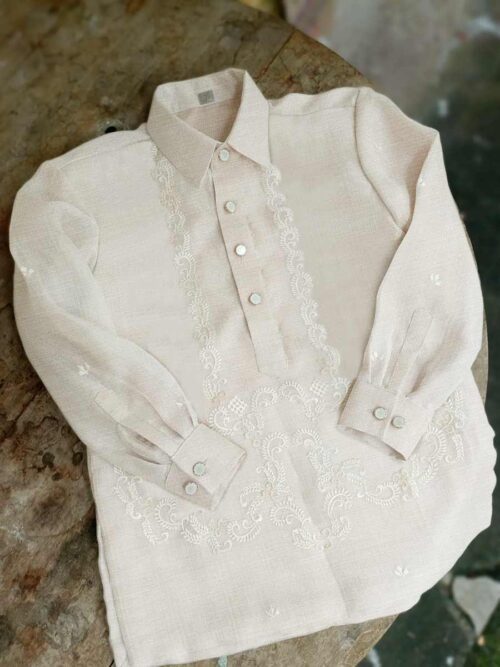
In this price segment, I would not expect custom sizing, because a significant part of the price here goes to the material and the ornamentation. It is possible to find a barong made to measurements within this budget, but most likely that would come at the expense of fabric quality. If I had to choose between material and fit, I would choose material, because it largely determines the level of the barong.
You have to be careful with fabrics in this category. The word “piña” in the name does not automatically mean the fabric is natural. Sometimes it is just a marketing label, and this is especially noticeable in the US market. It happens in the Philippines too, but less often. Ordering a barong from the Philippines is not difficult now, so from this point on I will be talking specifically about the Philippine market.
In the mid-range category, I would consider a barong made from Linen Silk or Cocoon Silk. This is the level where you can already get a more decent material without going into an expensive custom order. On the market, Linen Silk is usually presented as a blend of linen and silk, while Cocoon Silk is presented as a silk-based fabric, and this usually has a positive effect on comfort. As for ornamentation and cut, at this level you generally choose from what is available: more complex ornamentation will cost more, while simpler ornamentation will cost less.
Which Barong I Would Choose in the High-End Segment
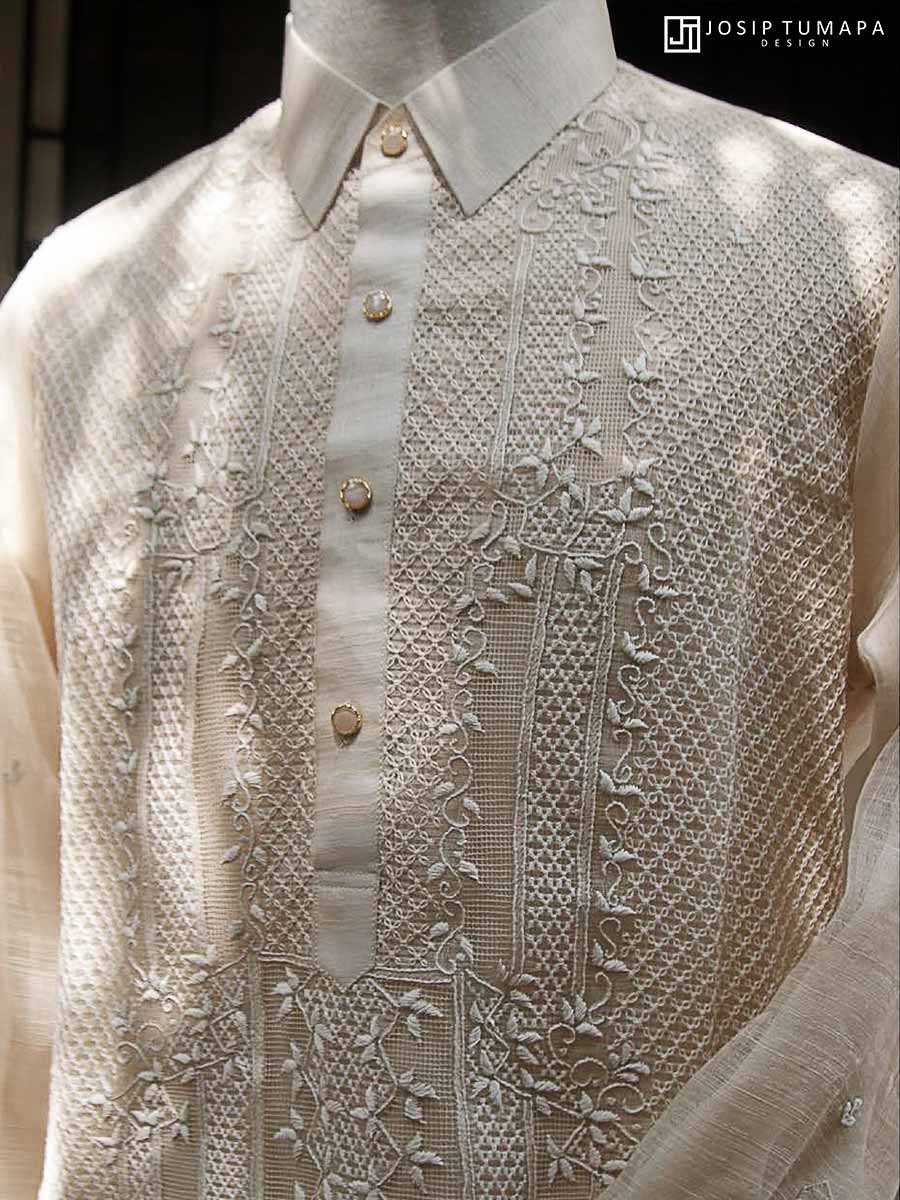
The high-end segment starts at $200 or ₱10,000 and above. These barongs are also often chosen for weddings. Here there is more choice in both ornamentation and materials. As for fabric, I would prefer piña cocoon silk with added natural piña. It is not too hot to wear, and the natural piña gives the fabric a pleasant sheen. In addition, this kind of material is connected to Filipino tradition and to the craftsmanship on which the barong itself is built.
At this level, it already makes sense to order a barong made to your measurements, because the garment should sit well on the body, which is especially important for a classic barong. I also like barongs with a built-in lining, because that is more convenient. As for ornamentation, both machine embroidery and hand embroidery are available here. Personally, I prefer hand embroidery, because you can feel a certain warmth in it through the slight irregularity of the stitches. In an age of automation and identical copies, that looks more interesting.
A barong like this would cost around $350–$450. But at this point I begin thinking less about general advice and more about the kind of barong I would order for myself. And I really do plan to do that.
I would add a custom plant-inspired ornament on the front, on the sleeves, and on the shoulder area. And of course, I would choose calado embroidery on the front panel.
Calado is a traditional openwork embroidery technique done by hand, and it creates a finer, more detailed ornament. I like it very much.
A barong of this kind would already cost from $600 and up. I would expect it to be around $750. The exact cost depends on many factors: the designer’s name, the level of the workshop, where the material is sourced, and the complexity of the work, so the final price could easily be much higher.
About the Author
Anton Dvoryadkin is General Manager at Josip Tumapa Design in the Philippines. He works with client communication, international inquiries, and brand content, with a focus on Barong Tagalog and Filipino formalwear.
FAQ
1) Is a cheap Barong Tagalog always synthetic?
No. But in the lower price range, synthetic and semi-synthetic fabrics are more common. In that segment, I would first look for cotton or polycotton, because they are usually more comfortable than fully synthetic options.
2) Is organza a good choice for a budget wedding barong?
It can work, especially if the budget is tight and the barong still needs to look formal enough for a wedding. The drawback is comfort. Organza can feel hot and may stick to the body during a long event.
3) In the mid-range segment, what matters more: fabric or custom fit?
For me, fabric matters more. In this range, much of the price already goes into the material and ornamentation. A made-to-measure barong is possible, but often at the cost of fabric quality.
4) Is a custom barong worth it only in the high-end segment?
In most cases, yes. In the mid-range segment, I would usually choose better material over custom sizing. In the high-end segment, custom measurements make more sense, especially for a wedding or another formal occasion.
5) Which fabric would I choose for a classic wedding barong?
With a higher budget, I would choose piña cocoon silk with added natural piña. It is easier to wear, looks better, and suits a classic wedding barong well. In the mid-range segment, I would look at Linen Silk or Cocoon Silk.