
Barong Ornament: Traditional, Ethnic, Personalized
Ornamentation plays a central role in how a Barong Tagalog is perceived.
In practical terms, it refers to embroidery patterns and, in some cases, openwork details such as calado. Calado is created by removing selected fibers from the fabric and interlacing the remaining threads, forming open areas within the design.

While fabric and cut set the foundation, ornamentation shapes the overall impression. The sections below outline three ornament approaches commonly used in barong design, followed by a brief comparison and guidance for selection.

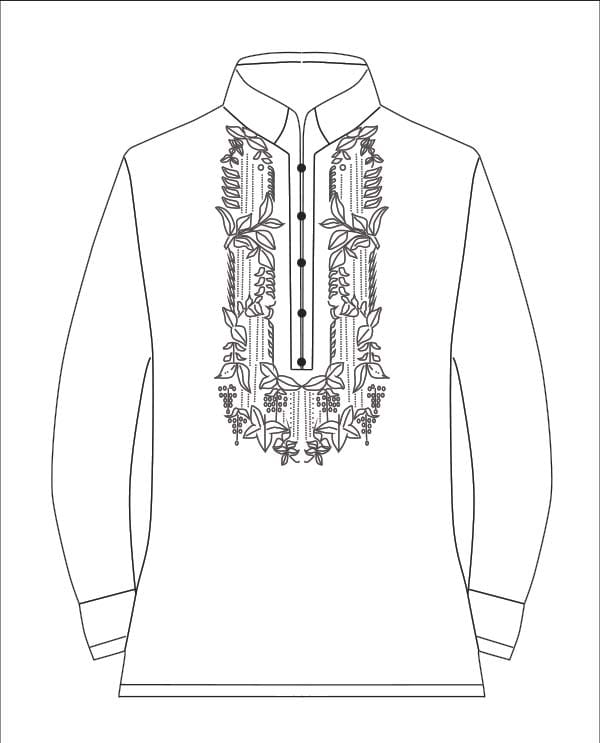
Barong Tagalog design with floral and leaf patterns, symbolizing harmony and elegance

Traditional Design

– Inspired by the classic motifs of the Barong Tagalog.
– Features intricate floral and leaf patterns.
– Symbolizes natural harmony and elegance, often used in formal and cultural events.
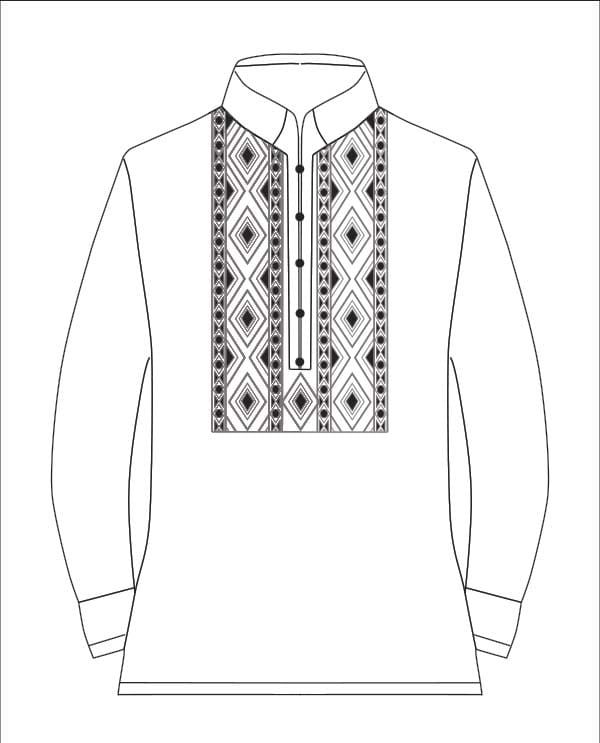
Ethnic Barong Tagalog design with geometric diamond patterns, reflecting Filipino tribal traditions

Ethnic Design

– Based on geometric patterns characteristic of indigenous Filipino tribes.
– Uses repeating diamonds and lines to create an ethnic aesthetic.
– Highlights a connection to roots and traditions, making it perfect for those who want to express their national identity.
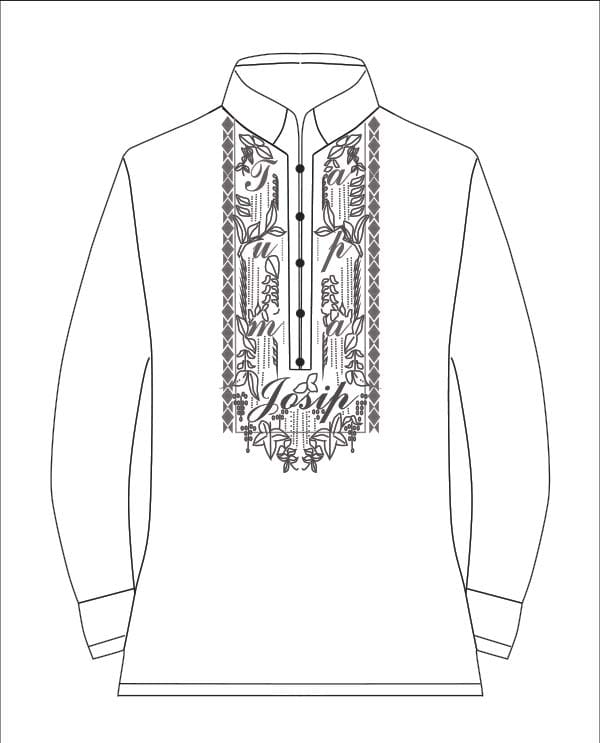
Personalized Barong Tagalog design with floral patterns and a named ornament, blending tradition and modern style

Personalized Design

– Rooted in traditional elements but enhanced with personalized details (e.g., the name “Josip”).
– Adds a unique character by blending classic patterns with modern accents.
– A great choice for individual style, weddings, anniversaries, and special occasions.

Traditional Barong Ornament

Key visual traits

Traditional ornaments rely on organic motifs—most often leaf and floral forms—arranged symmetrically along the chest panel. The embroidery is typically freeform, allowing slight variation within a balanced composition. When the fabric allows, calado may be introduced to add lightness and surface depth.

Best for

Formal ceremonies, weddings, and settings where a conventional Barong Tagalog appearance is expected.

Why clients choose it

In practice, this style is requested when clarity and formality matter more than experimentation. It is widely understood, visually balanced, and rarely raises concerns about appropriateness in ceremonial contexts.

Ethnic Barong Ornament

Key visual traits

Ethnic ornamentation is constructed through geometry rather than organic flow. Straight lines, repeated shapes, and controlled spacing define the embroidery, creating a measured and graphic rhythm across the front panel.

Cultural reference

Instead of floral symbolism, this approach follows indigenous-inspired pattern logic based on repetition and structure. The emphasis is on order and alignment rather than decorative variation.

Best for

Clients looking for a stronger graphic character while keeping the barong within a formal framework.

Personalized Barong Ornament

What counts as personalization

Personalization usually involves subtle adjustments rather than prominent additions. Initials, dates, or symbolic details are integrated into the embroidery pattern itself, not placed as separate or dominant elements.

When it works best

This approach is often chosen for weddings, anniversaries, or custom commissions connected to a specific event or milestone.

Keep it refined

The key consideration is restraint. Personal details work best when they follow the existing rhythm of the ornament and do not interrupt the overall composition.

Differences Between Traditional, Ethnic, and Personalized Ornaments

Motif type: organic forms / geometric patterns / combined structures
Pattern construction: freeform embroidery / measured repetition / hybrid layouts
Formal use: ceremonial convention / graphic expression / personal context
Purpose: established visual language / pattern emphasis / individual meaning

How to Choose the Right Ornament Style

Maximum formality

Traditional ornamentation.

Graphic emphasis

Ethnic ornamentation.

Personal occasion

Personalized ornamentation with restrained integration.

Final note

Ornament selection is usually finalized during a private consultation, where placement and proportion can be adjusted to suit the intended occasion.