Traditional Filipino clothing

Modern Filipiniana: How It Is Worn Today

Couple wearing modern Filipiniana and Barong with sea turtle embroidery, soft butterfly sleeves and beige tones outside

Introduction

Modern Filipiniana is not a new form of dress. It retains the butterfly sleeves and the terno silhouette, but some features have been simplified for comfort and to suit contemporary fashion. In the past, Filipiniana was worn mainly for formal occasions, but today it can also be seen in schools and government offices. Alongside traditional fabrics, which are quite expensive, modern Filipiniana also uses newer materials.

Modern Filipiniana in Today’s Philippines and Beyond

In the Philippines today, Filipiniana is no longer limited to formal occasions. The Civil Service Commission requires government employees to wear Filipiniana-inspired attire on Mondays, which has made it more common in public offices. At the same time, the Cultural Center of the Philippines continues to support TernoCon, a program that encourages designers to update the traditional terno for present-day use.

Because of this, Filipiniana is now seen more often in workplaces, schools, and cultural events, not only at ceremonies and state functions.

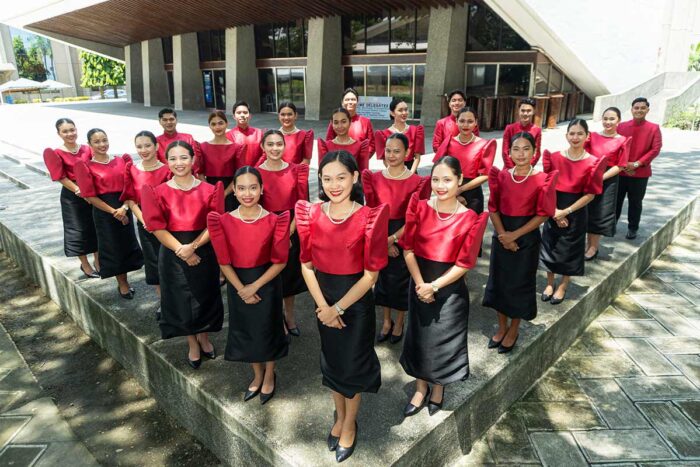
Staff in Filipiniana uniforms and modern Barong Tagalog at Luce Auditorium, Silliman University, Dumaguete
Theater staff at Luce Auditorium, Silliman University, wearing Filipiniana-inspired uniforms designed by Josip Tumapa Design.

Contemporary Filipiniana Styles for Every Occasion

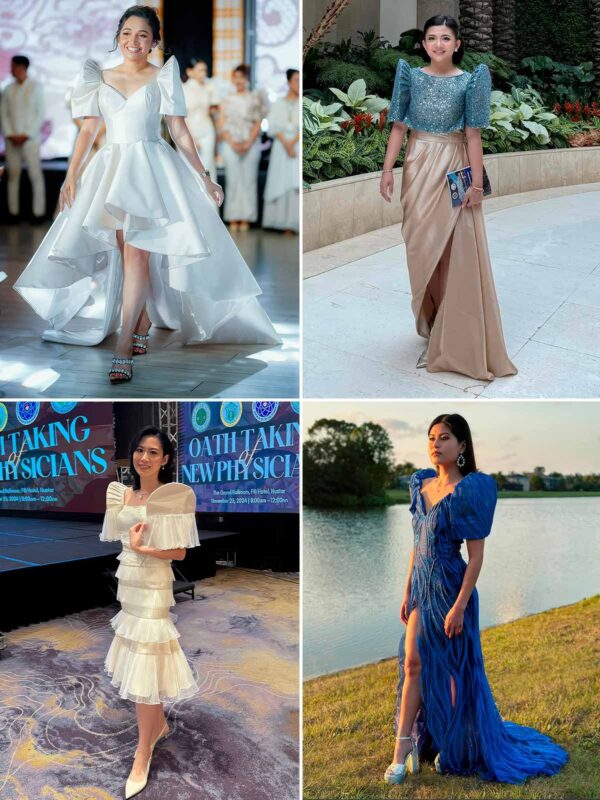
Take a closer look at these four dresses. One is white and layered, made for a ballroom. One pairs a sequined top with a floor-length satin skirt. One is ivory and tiered — short enough for a school event, formal enough for an oath-taking. The last is blue with a slit, worn at sunset by the water.

Different occasions. Different silhouettes. All four keep the butterfly sleeve.

That sleeve is what ties modern Filipiniana together. Designers change the length, fabric, and structure — but the shoulder stays. Today these dresses appear at graduations, oath-takings, state dinners, and debut balls.

Modern Filipiniana dresses for formal and evening events, featuring contemporary Terno designs by Filipino creators
Contemporary Filipiniana gowns — from layered ivory to blue and gold styles — showing how tradition evolves into modern Filipino fashion

Filipiniana Wedding Dresses: Traditional Elegance for Modern Brides

Filipiniana wedding dresses have been appearing in our orders more often in recent years — not just from the Philippines or the US, but from other countries too. Most brides go for the Terno. The Baro exists, but it’s rarer.
Paired with a Barong Tagalog on the groom, it reads immediately as Filipino. Some couples go further and request piña fabric, which is beautiful and genuinely difficult to work with, so it’s not common.

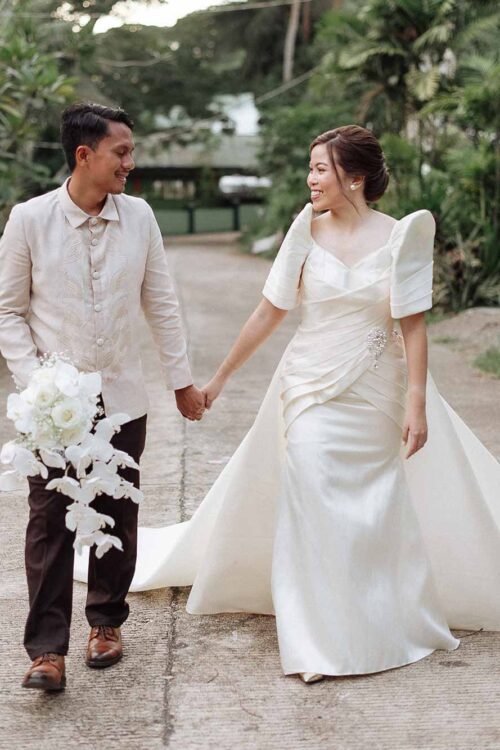
Bride in minimalist Filipiniana Terno wedding gown walking with groom in Barong Tagalog
Bride and groom in a minimalist Filipiniana Terno and Barong Tagalog, blending tradition with modern style
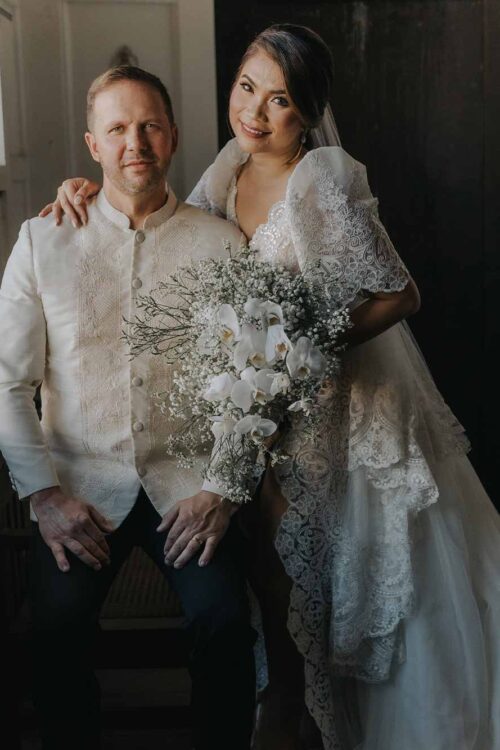
Bride in a custom Filipiniana Terno wedding gown with intricate lace beside groom in Barong Tagalog
A bride in a fully customized Terno gown with lace details, paired with the groom’s Barong Tagalog

How to Choose the Right Filipiniana Dress for Your Body Type and Occasion

Let’s look at Filipiniana dress styles, including wedding designs, that suit different body types by highlighting strengths and softening less flattering areas.

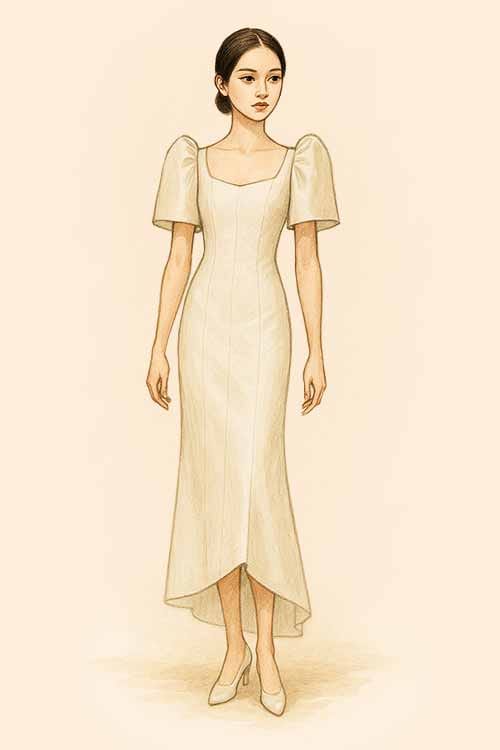
Light Filipiniana dress with vertical seams for petite figure

Petite figures

A slim-cut Filipiniana with vertical seams or an asymmetrical hem can create the effect of extra height. Light fabrics like piña or organza in soft tones keep the look airy.
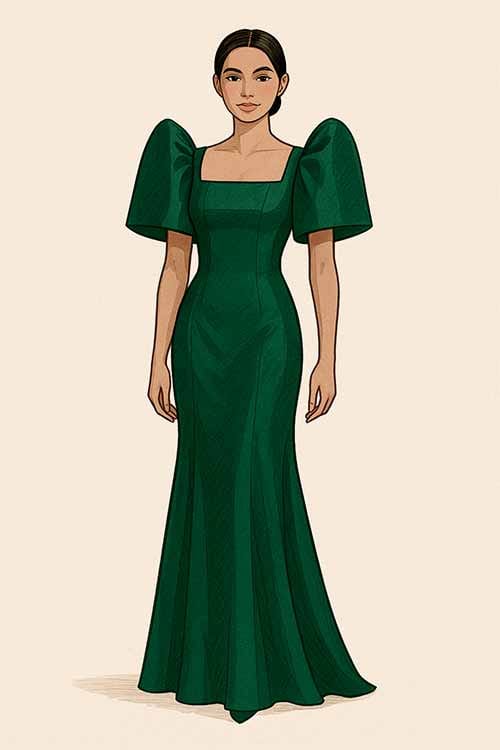
Emerald green Filipiniana with butterfly sleeves adding shoulder volume

Narrow shoulders

Terno gowns with butterfly sleeves add volume on top and balance proportions. Richer shades such as emerald or maroon give a stronger, regal feel.
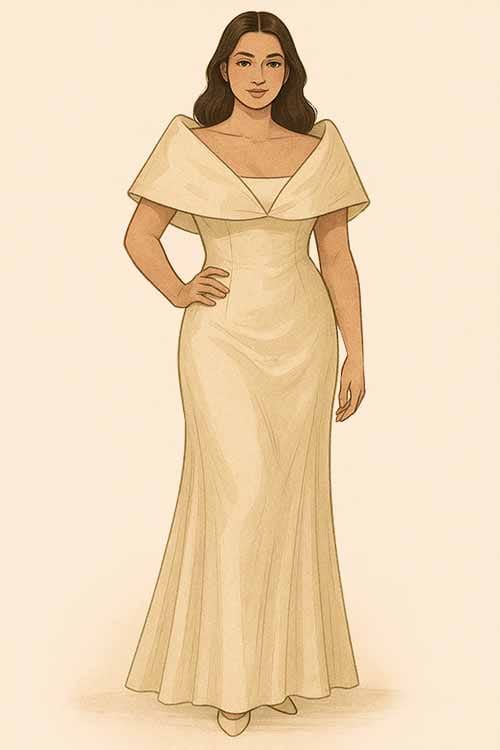
Filipiniana dress with panuelo shawl and smooth fabric for curves

Curvy figures

The Maria Clara style with its panuelo shawl softens the shoulders and draws focus to the waist. Smooth fabrics like silk enhance curves without adding bulk.
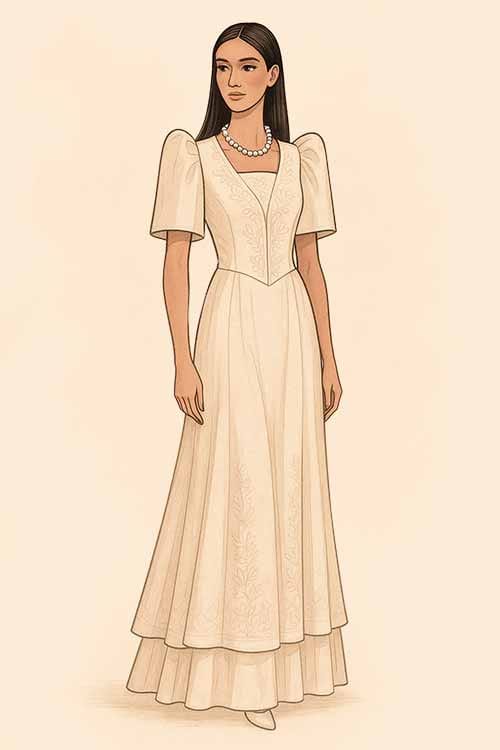
Traditional Baro’t Saya inspired Filipiniana with layered skirt and embroidery

Tall figures

Baro’t Saya or layered Filipiniana designs highlight height gracefully. Full skirts and embroidery emphasize the frame while keeping it balanced.
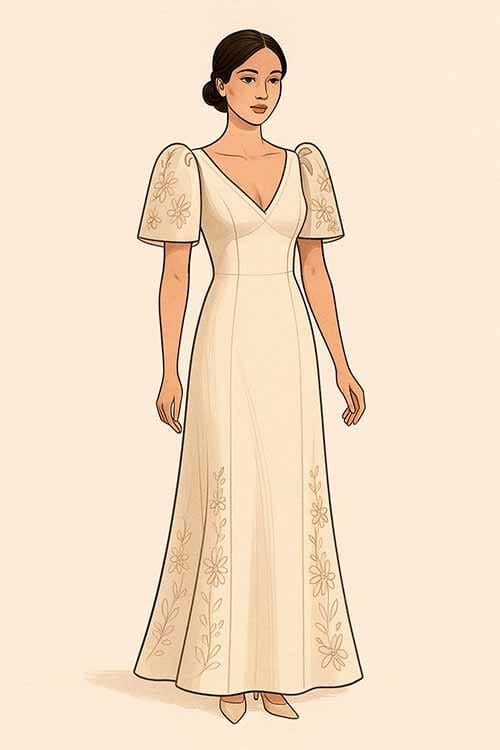
Filipiniana dress with V-neckline and light floral embroidery

Apple-shaped figures

A Filipiniana with a V-neckline or empire waist elongates the torso and shifts attention upward. Light embroidery on sleeves or the skirt works better than heavy details at the waist.
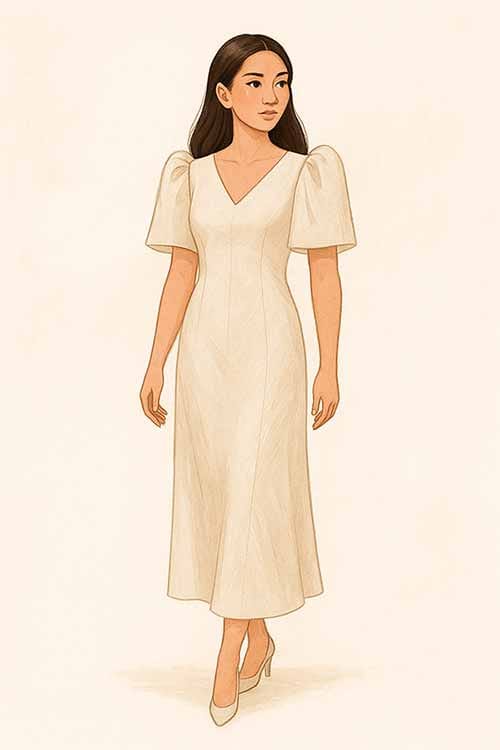
Contemporary Filipiniana dress with loose fit and soft fabric

For comfort

Contemporary Filipiniana styles with lightweight fabrics and looser cuts allow easy movement. Minimal layers and neutral shades keep the traditional look fresh and relaxed.
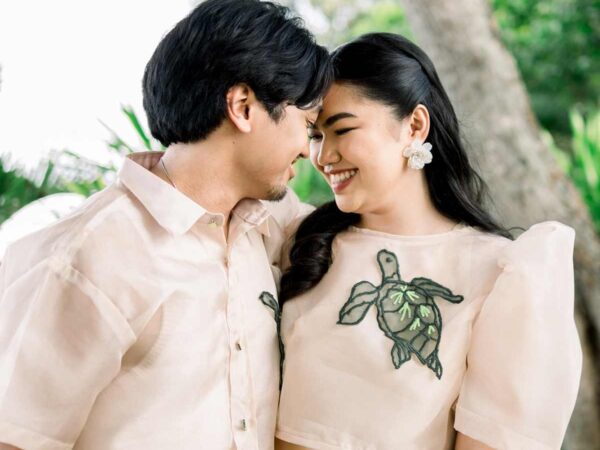
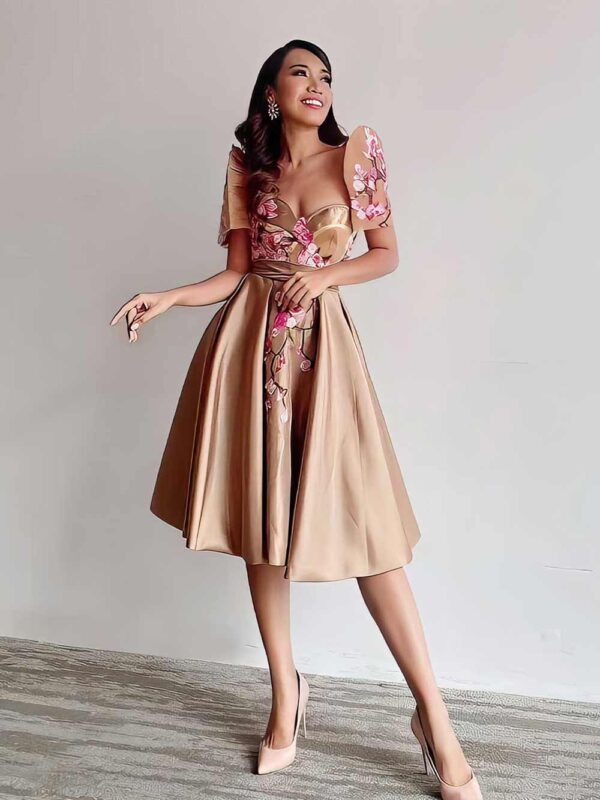
Modern Filipiniana is not worn only as a long formal gown anymore. You now see shorter versions at school events, in offices, and at official functions. Designers work with silk, organza, lightweight blended fabrics, asymmetrical cuts, and layered details so the dress feels less heavy and easier to wear in a tropical climate. The shape may change, but the familiar details stay — butterfly sleeves, traditional weaving, and hand embroidery.

Lightness and Ease

Manila in April does not suit heavy layers or rigid corsetry. Modern Filipiniana knows that. Lighter fabrics, softer draping, and silhouettes that allow movement are becoming more common. This is less about trend than about heat, sweat, and the reality of wearing the dress for more than ten minutes.

More Restrained Decoration

There was a time when formal meant more: more embroidery, more layers, more weight. Many designers now stop earlier. One line of embroidery in the right place can do more than a fully covered bodice. A fabric with enough texture does not need much help.

New Forms

Filipiniana is no longer only a dress. The same sleeve volume, local textiles, and familiar cut now appear in jackets, blouses, and separates. The form has loosened. The reference is still there.

Local Fabrics and Handwork

Clients still ask direct questions: is it hand-finished, and is the fabric really local? Piña from Kalibo means something to people who know what they are looking at. For some buyers, that matters as much as the silhouette.

Technology and Hand Embroidery

Digital embroidery is faster and cheaper. Nobody needs to pretend otherwise. But hand embroidery has not disappeared, because some clients do not want two pieces that look factory-identical. A slight difference in stitch, density, or finish is not always a flaw. Sometimes that is exactly the point.

Modern Filipiniana dress with butterfly sleeves and floral embroidery showing today’s Filipino fashion direction
Modern Filipino look showcasing the trend toward lighter fabrics, floral details, and practical silhouettes.

Filipiniana Accessories and Details

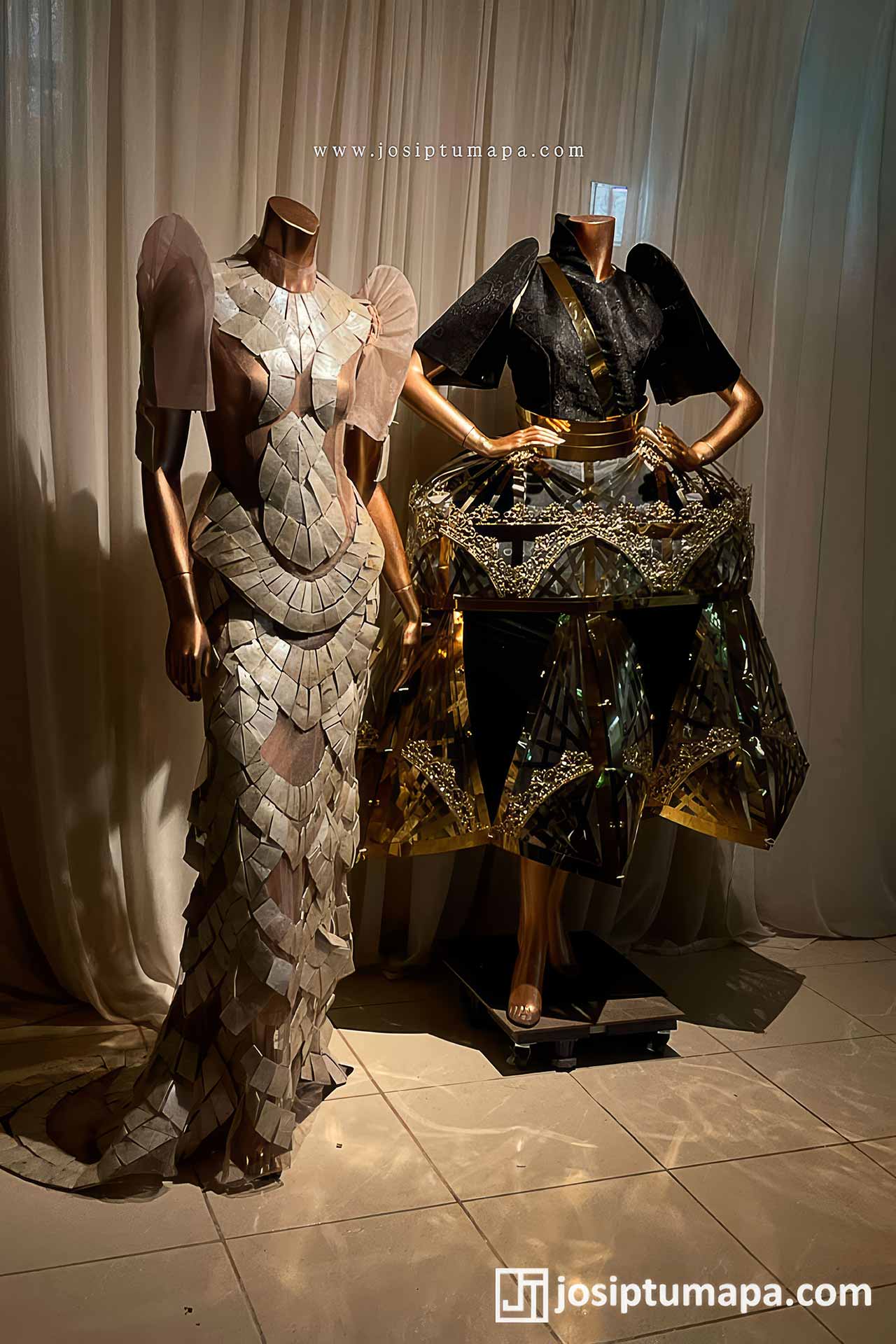
Modern Filipiniana looks are often completed with statement accessories. Large earringspearl jewelry, and gold accents highlight the neckline and complement the butterfly sleeves. A structured clutch or embroidered fan adds a refined touch without breaking tradition. For hairstyles, sleek buns or low twists balance the sculptural shape of the dress. Designers also combine traditional materials—piña fabricabalone shell, and hand-woven fibers—with modern metallic finishes. The mix of heritage textures and minimal styling keeps the Filipiniana timeless yet current.

FAQ: Filipiniana

1) What fabrics are commonly used in the Filipiniana?

Traditional designs use natural fibers like piña, jusi, or silk blends for lightness and structure, while modern versions sometimes adapt breathable cotton or organza.

2) How should you care for delicate Filipiniana fabrics?

Gently hand-wash in cold water, avoid twisting, and store on padded hangers inside a breathable garment bag.

3) Can the Filipiniana be worn every day?

Yes. Modern cropped blouses, lighter materials, and simplified silhouettes make it possible to wear Filipiniana-inspired outfits casually.

4) For what occasions is the Filipiniana appropriate?

State receptions, university events, weddings, and cultural celebrations — any setting where tradition and elegance meet.
👉 If you’re preparing for a formal or cultural event, explore trusted Philippine retailers in Where to Buy Barong Tagalog Online — Verified Stores offering authentic Filipiniana and Barong designs.

5) How to choose a Filipiniana for comfort and climate?

Use breathable, lightweight fabrics and fewer layers; opt for soft linings in cool indoor spaces.

6) What modern silhouettes are trending today?

Simplified cuts, smooth drapes, and smaller butterfly sleeves — designs that balance heritage and comfort.

7) What’s more important in modern Filipiniana — fabric or silhouette?

Fabric preserves tradition, while silhouette defines contemporary relevance; modern versions merge both.

8) What do the pañuelo and tapis represent?

The pañuelo adds modesty and grace, while the tapis enhances proportion and highlights the waistline.

9) Which colors are most appropriate for formal occasions?

Light neutrals or rich gemstone hues — elegant, understated, and respectful for ceremonial events.

10) Are there rules about skirt length in the Filipiniana?

Yes. Floor-length designs suit formal occasions; midi or knee-length versions are ideal for semi-formal and modern styles.

11) How to choose a Filipiniana for different body types?

Petite — vertical seams or asymmetric cuts; narrow shoulders — butterfly sleeves for balance; curvy — soft fabrics and fluid lines.

12) What defines quality embroidery and embellishment?

Fine hand-stitching, delicate motifs, and clean finishing indicate craftsmanship and authenticity.

Leave a Reply

Your email address will not be published. Required fields are marked *