
Evolution of Filipiniana: Traditional to Modern Styles

Introduction
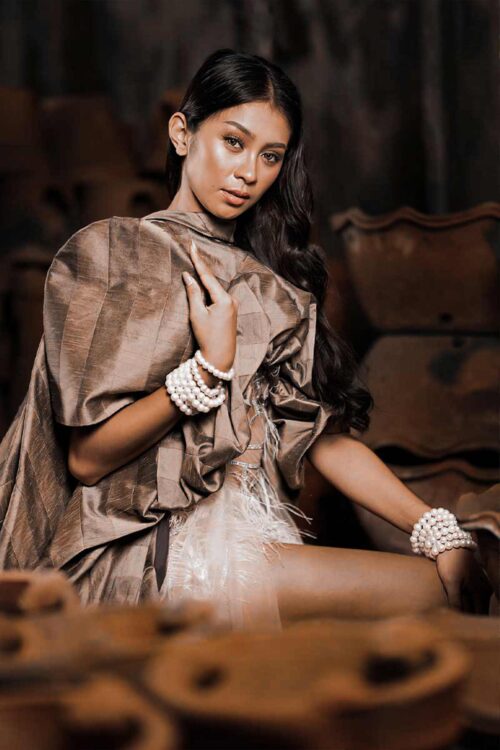
The evolution of the Filipiniana dress traces the story of Philippine heritage through fashion. Worn for centuries alongside the Barong Tagalog, the Filipiniana stands as a lasting symbol of tradition, artistry, and national pride. From the early Baro’t Saya to the graceful Maria Clara and today’s modern Filipiniana styles, it shows how Filipino culture continues to evolve while preserving its roots.
- Cultural Meaning and Symbolism of the Filipiniana
- Evolution of the Filipiniana Dress: From Baro’t Saya to Modern Terno
- Maria Clara: A Symbol of Filipino Femininity and Colonial-Era Elegance
- Styles and Terms: Traje de Mestiza, Balintawak, Pañuelo, Tapis
- Modern vs Classic Filipiniana: How Designers Reinvent Tradition
- FAQ: Filipiniana — From Classic to Modern
Cultural Meaning and Symbolism of the Filipiniana
The Filipiniana reflects Filipino dignity and identity. Its fabrics — piña and jusi — and details like the Terno’s butterfly sleeves link tradition with refinement. During colonial times, it marked class and modesty, yet women redefined it as a form of pride and heritage. In the 20th century, it became a national emblem worn at public and diplomatic events. Today, designers keep its timeless silhouette while giving it a modern character.
Evolution of the Filipiniana Dress: From Baro’t Saya to Modern Terno
The Filipiniana has changed over the centuries, shaped by colonial rule, social class, and shifting ideals of femininity. From the Baro’t Saya to the Maria Clara and later the Terno, each style reveals how Filipino women expressed identity and adapted to history.
Baro’t Saya: Origins of the Traditional Filipiniana Dress
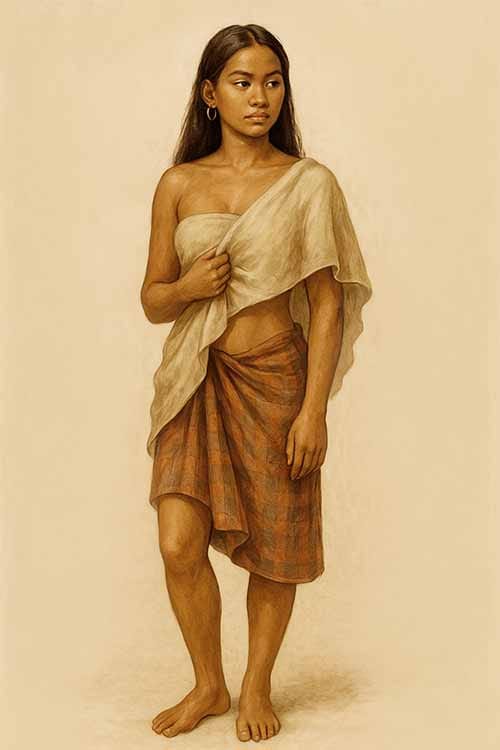
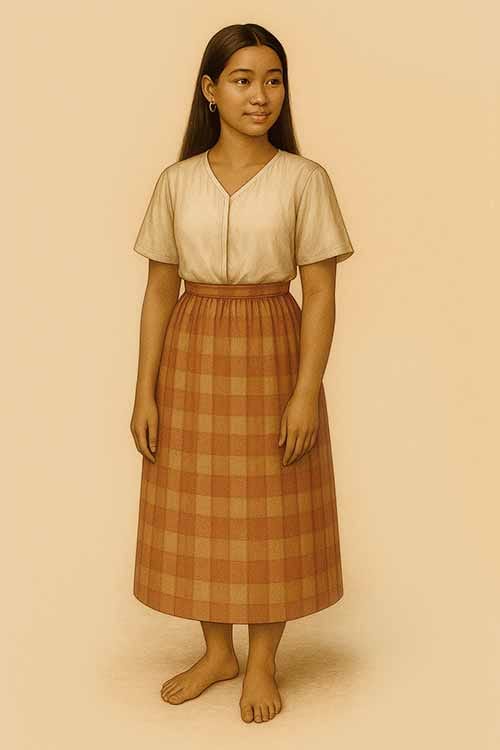
The Baro’t Saya took shape in the late 16th and 17th centuries, during the early decades of Spanish rule in the Philippines. It combined a light blouse (baro) with a long skirt (saya), balancing modesty and comfort in the tropical climate. In the 1600s, Spanish clergy, worried that native clothing was too revealing, encouraged longer skirts. This reshaped precolonial wraps into a more modest yet practical style.
By the 18th century, the dress showed both function and class. Farmers and vendors wore simple cotton or checkered cambaya fabric, imported through the Manila Galleon trade. Wealthier women chose jusi or, by the late 1700s, piña (pineapple fiber), whose translucent sheen and embroidery marked refinement and rank. Imagine a market in Manila around 1750: a vendor in sturdy cotton and a hacienda owner in a refined baro’t saya of jusi, her attire modest yet distinct in its softness and lightness.
Through three centuries of Spanish rule (1565–1898), the Baro’t Saya remained a part of daily life. Its survival reflected the ability of Filipinos to preserve their traditions and adapt their identity, even under colonial pressure.
Maria Clara: A Symbol of Filipino Femininity and Colonial-Era Elegance
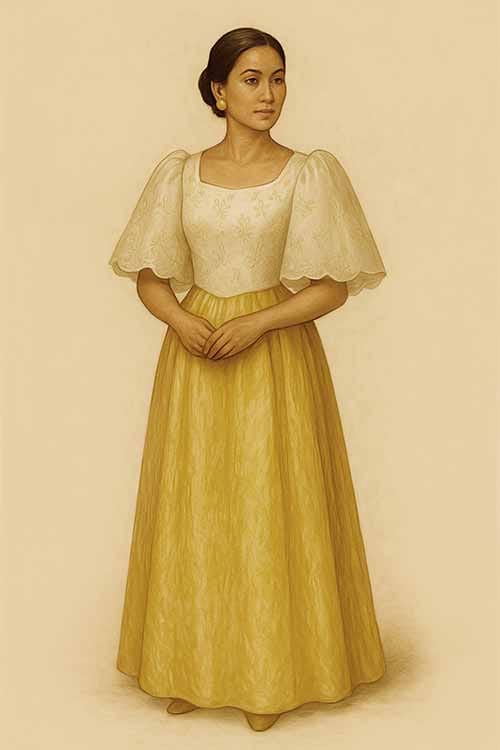
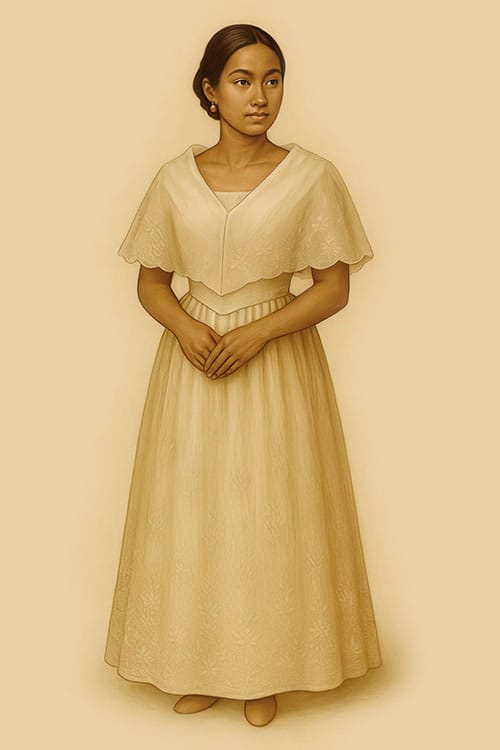
By the mid-19th century, the Baro’t Saya evolved into the Maria Clara, named after the heroine of José Rizal’s Noli Me Tángere (published in 1887). With its corset bodice, panuelo shawl, and richly embroidered piña fabric, it became the pinnacle of feminine grace and social aspiration.
The Maria Clara was often worn at church gatherings and formal events in the late 1800s, radiating an air of refinement. Yet it also carried a paradox. Just as Rizal’s Maria Clara embodied both beauty and restraint, the dress symbolized elegance within the confines of colonial expectations. To wear it was to declare education, class, and refinement — while still conforming to ideals of modesty and virtue set by society.
Terno Dress: Iconic Butterfly Sleeves and Filipino National Pride
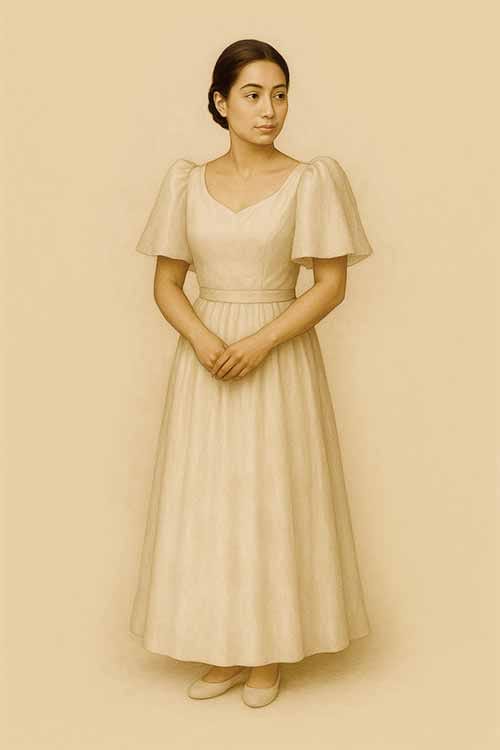
In the early 20th century, the Filipiniana evolved once more with the appearance of the Terno. Its streamlined silhouette and dramatic butterfly sleeves, introduced in the 1920s, gave it an instantly recognizable character. By the 1930s, the gown had become the preferred formal dress for Filipino women, symbolizing a move toward modern elegance while keeping ties to tradition.
In the 1940s, designer Ramon Valera modernized the Terno by eliminating the separate pañuelo and creating a seamless version of the butterfly sleeve — a design that remains influential today.
The dress also gained political and cultural weight. During the late 1960s and 1970s, First Lady Imelda Marcos adopted the Terno as her signature attire at diplomatic events, turning it into a visual symbol of Filipino identity abroad. Around the same time, the gown appeared on international stages such as Miss Universe pageants (from 1969 onward, when the Philippines first hosted the event) and world expositions, presenting the butterfly sleeves as a confident marker of heritage.
Today, the Terno continues to inspire designers, who experiment with fabrics and cuts while preserving its iconic sleeves. This balance of tradition and reinvention keeps the gown relevant while maintaining its place as an enduring emblem of Filipino pride.
Baro’t Saya is the simple foundation: a light blouse and skirt. Maria Clara uses the same base but looks more festive with its corset, pañuelo, and embellishments. The Terno is easy to recognize by its signature butterfly sleeves.
Reference: ‘Evolution of Philippine Costume’ – Philippine Folklife Museum Foundation
Styles and Terms: Traje de Mestiza, Balintawak, Pañuelo, Tapis
The Filipiniana dress evolved not only through its main forms — Baro’t Saya, Maria Clara, and Terno.
Over time, different regions developed their own versions that reflected climate, lifestyle, and social standing. These include Traje de Mestiza, Balintawak, Pañuelo, and Tapis — styles and elements that show how traditional clothing adapted to everyday life while preserving its cultural roots.
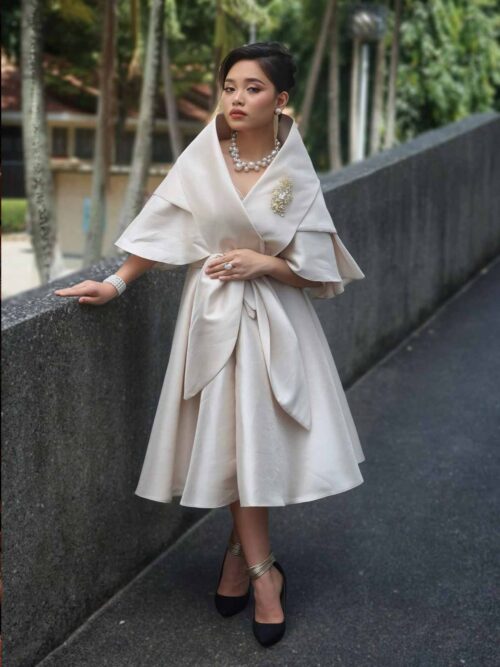
A modern Filipiniana inspired by the traditional pañuelo — a shawl worn with Maria Clara dresses in the late 19th century.
Soft lines and a sculpted collar refresh the traditional form while preserving its distinctive character.
What Makes These Styles Different
Baro’t Saya, Maria Clara, and Terno are the main silhouettes that trace the history of the Filipiniana — from simple native wear to urban and modern designs.
Traje de Mestiza, Balintawak, Pañuelo, and Tapis are not separate eras but specific variations and components within those silhouettes. They reflect how women adjusted their attire for daily activities, travel, and social occasions.
Traje de Mestiza Filipiniana Dress (Late 19th Century)
Emerging in the late 19th century among educated mestiza women, this version featured a fitted bodice, butterfly sleeves, and a long skirt made from fine piña or jusi fabric. It marked the transition from the simplicity of the Baro’t Saya to the refined elegance of the Maria Clara and Terno.
Balintawak Filipiniana Style (Early 20th Century)
A countryside version of the Terno, the Balintawak was designed for outdoor activities and travel. Made from checkered or floral fabric with a shorter skirt and lighter construction, it became a symbol of practicality and grace — clothing meant for comfort and freedom of movement.
Pañuelo Shawl — Traditional Filipiniana Element
A starched shawl worn over the shoulders. Initially used for modesty to cover the neck and chest, it later became a decorative accent. Made of translucent piña fabric and embroidered with fine details, it reflected both taste and status.
Tapis Overskirt — Precolonial Filipiniana Heritage
A narrow overskirt or wrap worn around the waist. It was placed over the main skirt as an added layer of fabric. Patterns and weaving styles varied by region, often indicating a woman’s origin or social class.
The Filipiniana was never one uniform style.
It changed naturally with the way people lived — shaped by climate, society, and daily life — yet it remained a lasting symbol of femininity and respect for tradition.
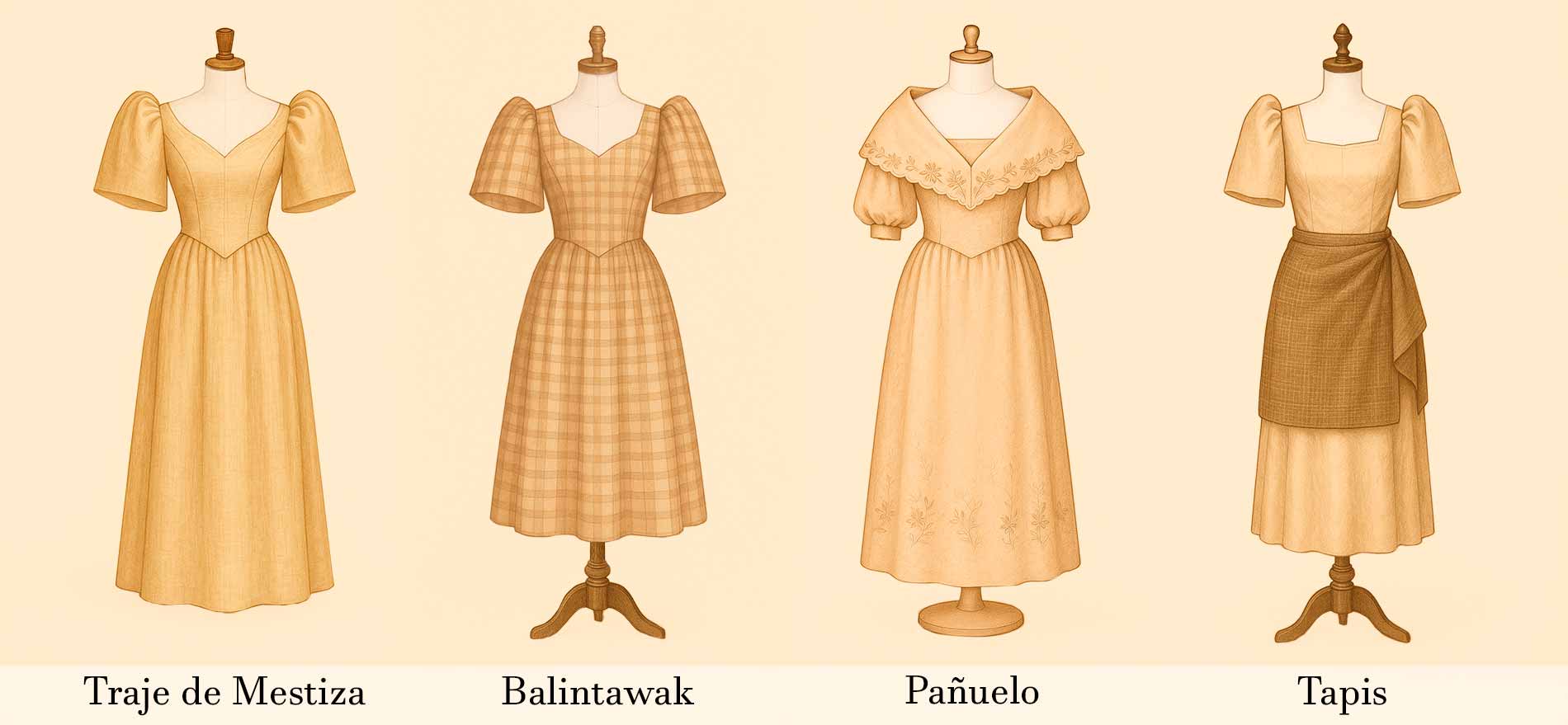
Illustration of historical Filipiniana dresses — Traje de Mestiza, Balintawak, Pañuelo, and Tapis. While simplified for clarity, it accurately represents documented silhouettes and traditional garment components found in museum collections.
Reference: The Philippine Dress: 500 Years of Straddling Polarities – Arts of Asia
Modern vs Classic Filipiniana: How Designers Reinvent Tradition
Modern Filipino designers often take inspiration from traditional Filipiniana styles. They reinterpret them in ways that sometimes make it hard to classify which style a dress belongs to.
In this section, we’ll look at three modern examples from Josip Tumapa’s work and compare them with classic styles. You can explore more contemporary Filipiniana designs on Josip Tumapa’s portfolio.
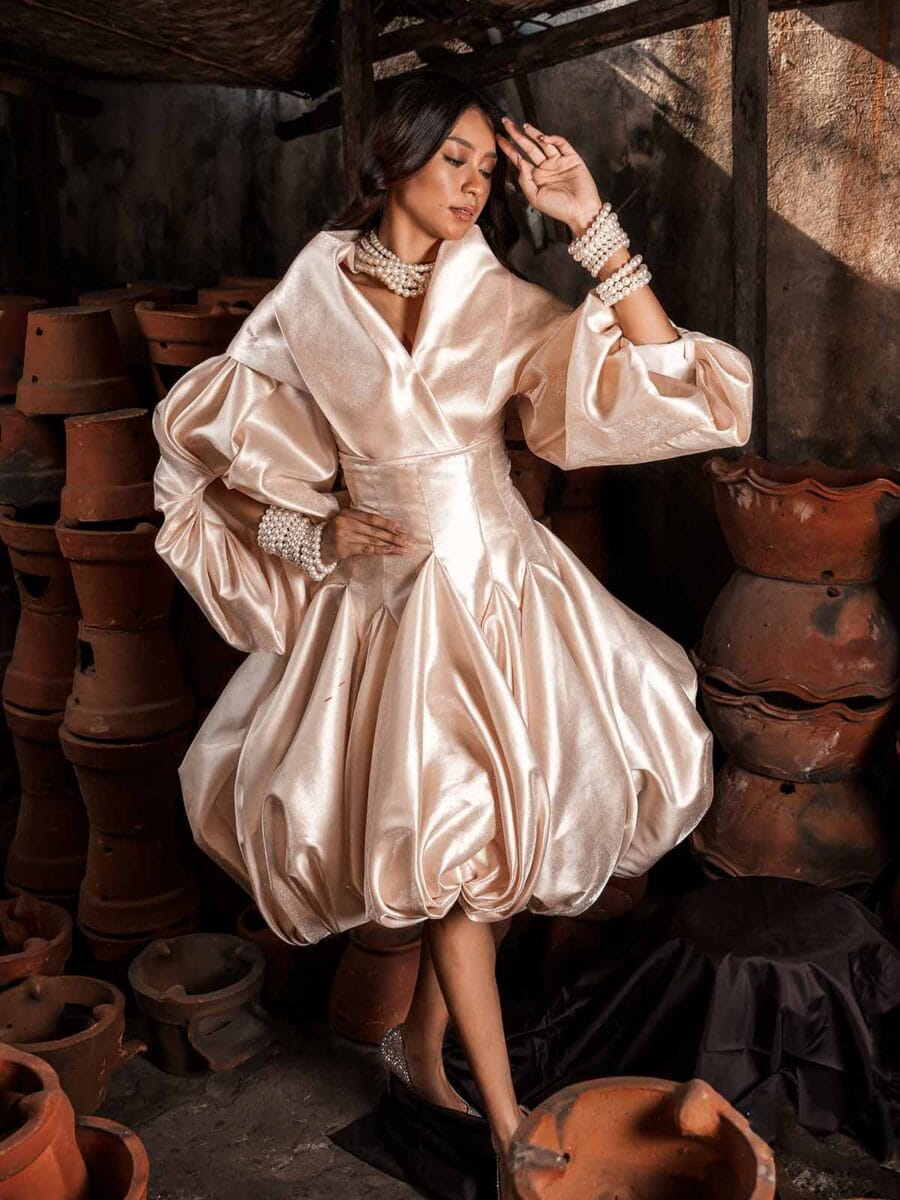
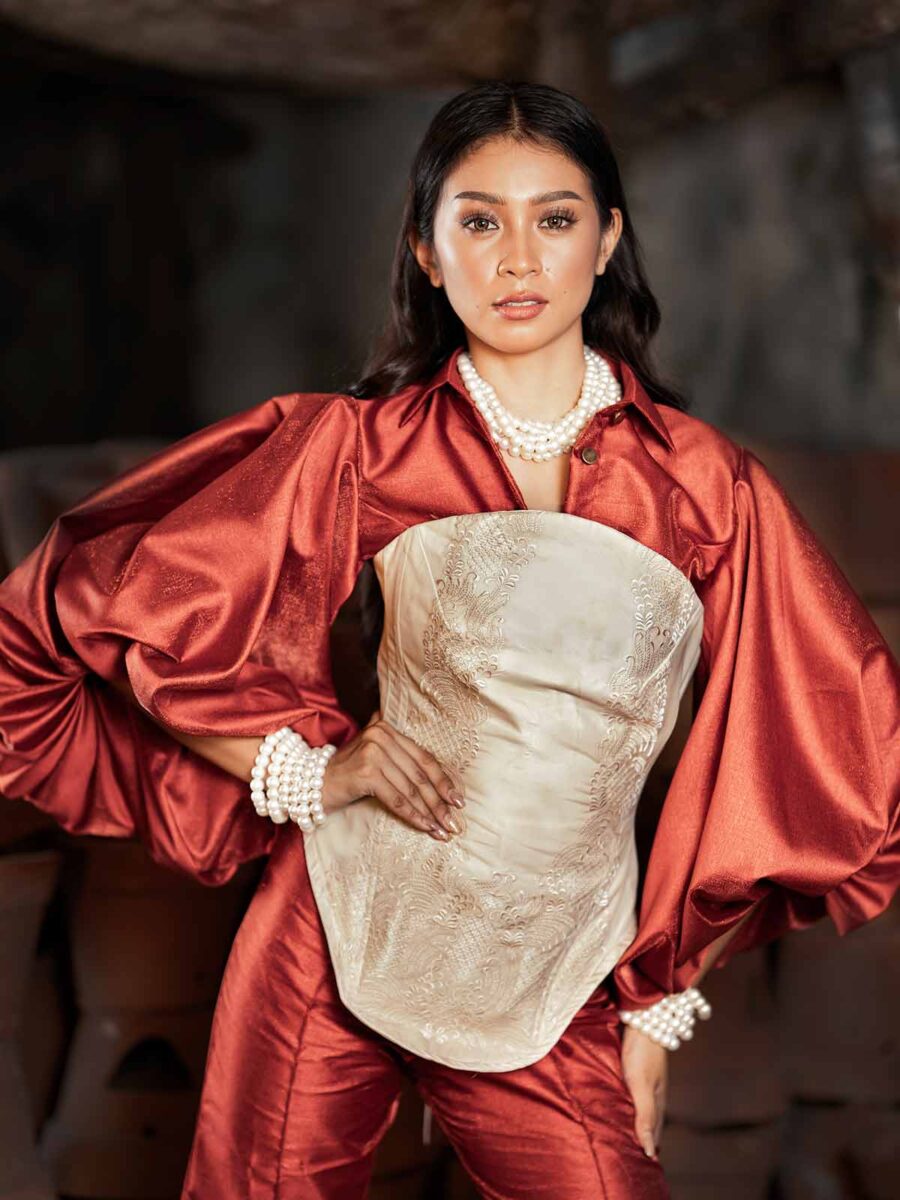
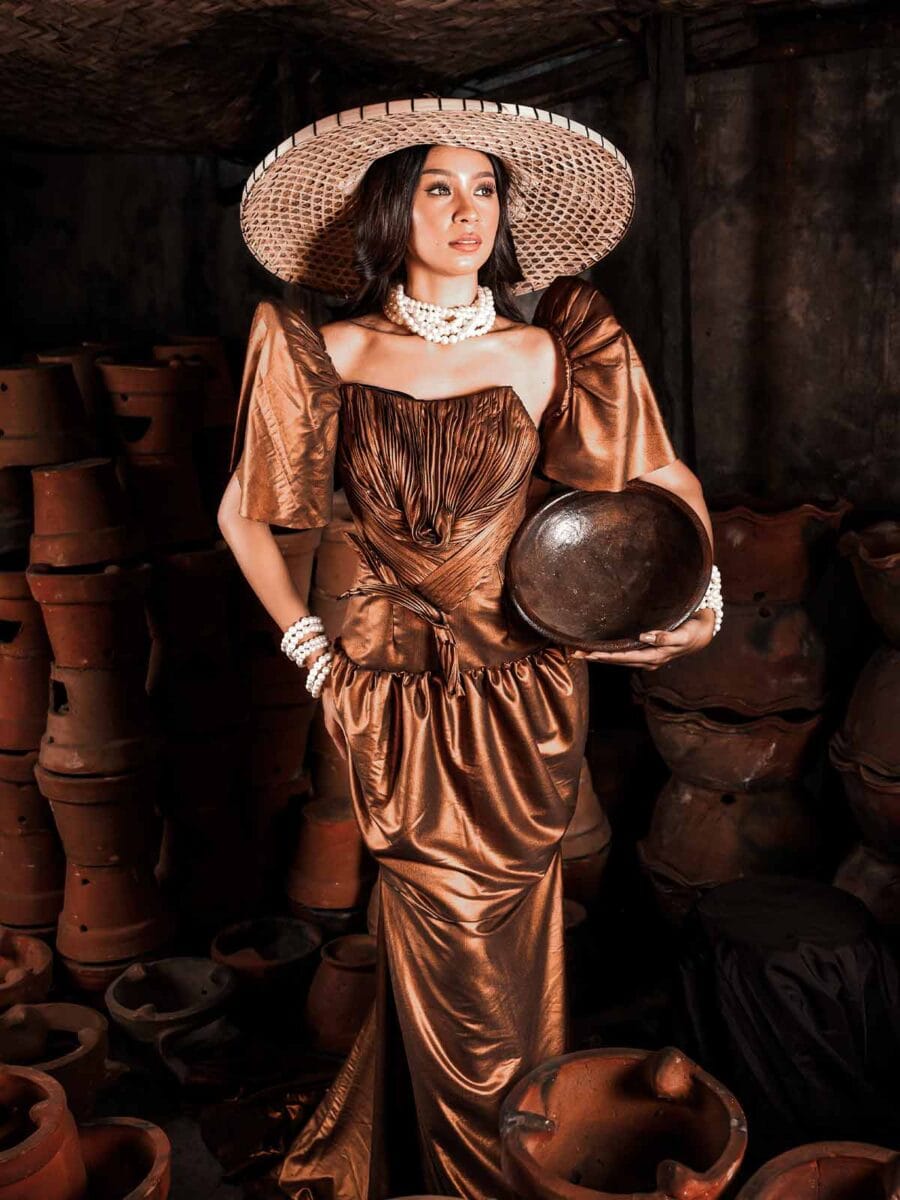
Modern vs Classic Filipiniana Styles: How Designers Reinvent Tradition
Look 1 (White dress with wide collar)
Style: A modern interpretation inspired by Maria Clara.
Why: The wide collar recalls the traditional pañuelo, with emphasis placed on the upper part of the gown. The silhouette and skirt design, however, are distinctly contemporary, setting it apart from the historical version.
Look 2 (Red ensemble with pearls)
Style: A contemporary Filipiniana outfit with Terno elements.
Why: The focus is on the voluminous sleeves, reimagined in a draped and flowing style rather than the stiff “butterfly sleeves” of classic Terno. Unlike the Baro’t Saya, which features light and simple sleeves, this design makes the sleeves the central highlight. The corset is crafted from piña silk, adding texture and cultural depth.
Look 3 (Bronze gown with wide hat)
Style: A reinterpreted Terno.
Why: The signature butterfly sleeves are present, but softened into a more fluid shape. Accessories such as the pearl jewelry and traditional wide hat bring a cultural touch while giving the outfit a distinctly modern fashion character.
This article focuses on the historical evolution of the Filipiniana. For contemporary silhouettes, occasions, and styling, see Modern Filipiniana: How It Is Worn Today.
FAQ: Filipiniana — From Classic to Modern
1) How is the Filipiniana different from the Baro’t Saya, Maria Clara, and Terno?
The Filipiniana is a general term. The Baro’t Saya is a blouse-and-skirt ensemble, the Maria Clara is its formal version, and the Terno is a one-piece gown with signature butterfly sleeves.
👉 Both the Filipiniana and the Barong Tagalog represent the same Filipino heritage — learn more about their shared symbolism in Barong Tagalog: Symbol of Filipino Heritage
2) What role did Ramon Valera play in the evolution of the Filipiniana?
In the 1930s–40s, Valera merged the separate pieces of the Baro’t Saya into one gown, removed the pañuelo, and introduced the zipper — creating the modern Terno.
3) What are the main components of a traditional Filipiniana ensemble?
Camisa (blouse), pañuelo (shawl), saya (skirt), tapis (overskirt), and inaguas (underskirt) — the essential parts of a traditional Filipiniana look.
4) What fabrics are commonly used in the Filipiniana?
Traditional designs use natural fibers like piña, jusi, or silk blends for lightness and structure, while modern versions sometimes adapt breathable cotton or organza.
5) How does the Baro’t Saya differ visually from the Terno?
The Baro’t Saya is a multi-piece outfit, while the Terno combines these parts into one gown with integrated butterfly sleeves.